
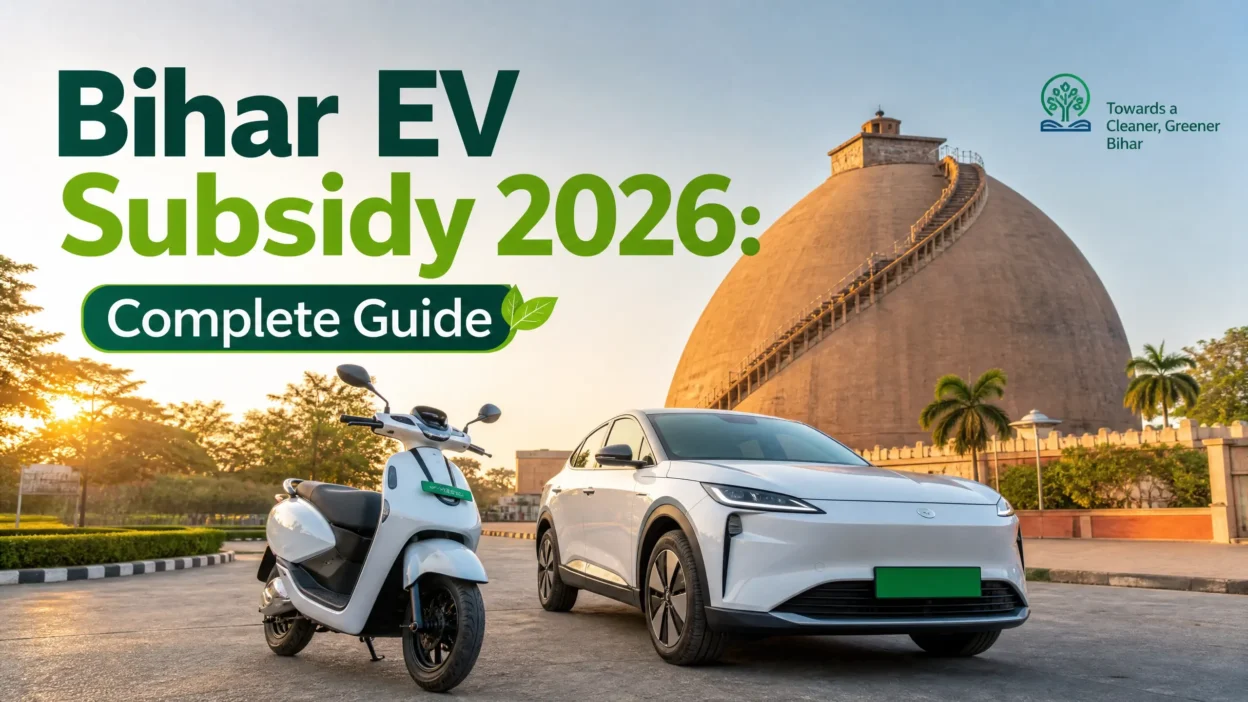
The shift toward green mobility is transforming Indian roads, and Bihar is actively driving this change. To reduce dependence on fossil fuels, curb rising air pollution, and build a sustainable transportation ecosystem, the state government launched the ambitious Bihar Electric Vehicle (Amendment) Policy 2026. Operating under the umbrella of the Mukhyamantri Bihar Paryavaran Anukul Parivahan Rozgar Yojana, the state has allocated a dedicated fund of ₹110 crore for the financial year 2026–27 to make electric vehicles (EVs) highly affordable for the general public.
For anyone considering a switch from a traditional petrol or diesel vehicle to an electric one, this policy offers significant financial benefits. The state provides direct financial incentives, substantial tax rebates, and subsidized public parking to make EV ownership highly practical.
This comprehensive guide covers everything needed to successfully navigate the online application process for the Bihar EV subsidy, covering eligibility criteria, required documents, and a detailed step-by-step walkthrough to get the subsidy amount credited directly to a bank account.
Understanding the Bihar EV Policy
The primary objective of the Bihar Electric Vehicle Policy is to accelerate the adoption of clean energy vehicles, aiming for 30% of all new vehicle registrations to be electric by 2030. State transport officials estimate that achieving this milestone will save approximately 10 crore liters of petrol and diesel annually, significantly improving air quality.
To achieve this goal, the 2026 revised policy introduces a layered incentive structure:
- Direct Purchase Subsidy: Cash incentives credited straight to the buyer’s bank account through Direct Benefit Transfer (DBT).
- Motor Vehicle Tax Rebates: A baseline 50% exemption on road tax for all registered EVs in the state, with an early-bird incentive providing up to a 75% rebate for the first 10,000 electric two-wheelers registered.
- Infrastructure Expansion: Financial incentives for public charging stations to eliminate range anxiety.
- Commercial Directives: Major fleet aggregators (such as Ola and Uber) must transition specified percentages of their two-wheelers to electric fleets over the coming years.
Eligibility Criteria: Who Can Claim the Subsidy?
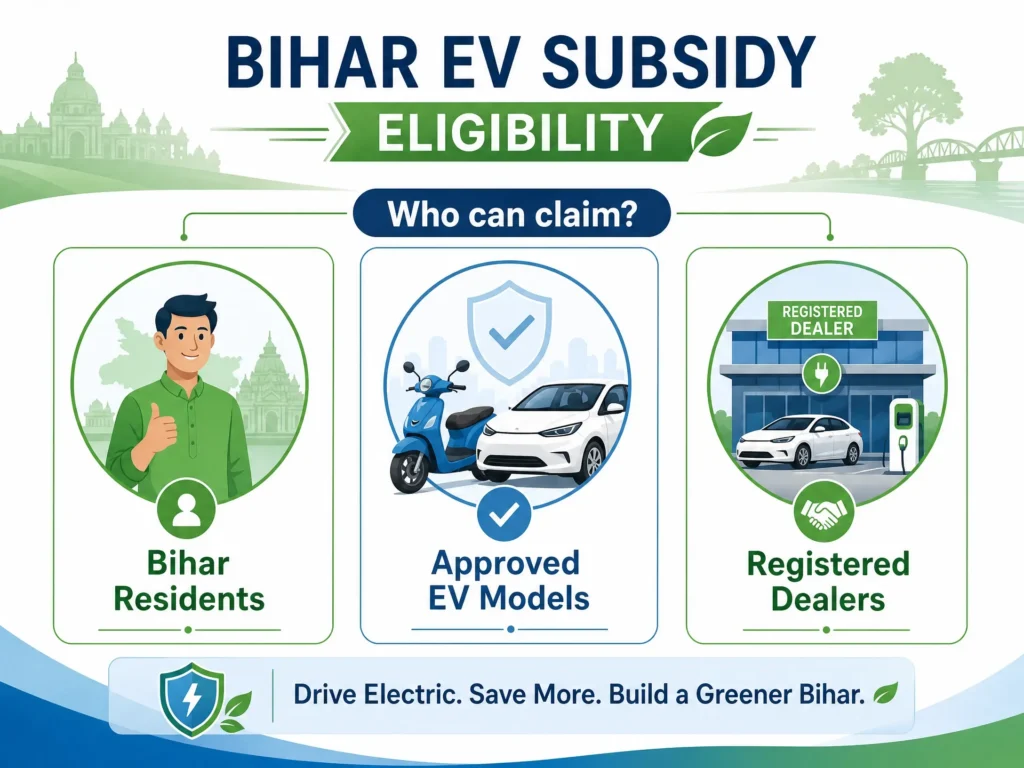
Not every electric vehicle automatically qualifies for a payout. The State Transport Authority enforces clear eligibility boundaries to ensure proper fund allocation:
1. Applicant Parameters
- Residency: The applicant must be a permanent resident of Bihar.
- Category Inclusions: Both individual private buyers and commercial entities/organizations can apply, provided the vehicle is registered within the state.
- Social Group Benefits: Enhanced subsidy slabs are reserved for buyers belonging to Scheduled Castes (SC) and Scheduled Tribes (ST).
- Gender-Focused Incentives: Special dedicated slabs encourage women to purchase electric cars and commercial electric vehicles under their names.
2. Vehicle Requirements
- Authorized OEMs: The vehicle must be manufactured by an approved Original Equipment Manufacturer (OEM) registered with the Bihar State Transport Authority.
- Technical Compliance: The model must comply with specific battery capacity and performance standards outlined under Central and State guidelines.
- Purchase Location: The EV must be bought from an authorized, state-registered dealer located within Bihar. Vehicles purchased outside state borders are ineligible.
Subsidy Slabs: What Can You Expect?
The financial incentive varies depending on the vehicle category, battery specification, and the background profile of the applicant.The table below outlines the current subsidy structure under the 2026 framework:
| Vehicle Type / Category | Beneficiary Classification | Subsidy Amount / Benefit |
| Electric Two-Wheelers | General Category | ₹10,000 flat subsidy |
| Electric Two-Wheelers | SC / ST Category | ₹12,000 flat subsidy |
| Electric Cars / Four-Wheelers | Female Buyers (Personal) | Up to ₹1,000,000 direct subsidy |
| Commercial EVs | General Category Women | ₹50,000 direct subsidy |
| Commercial EVs | SC / ST Category Women | ₹60,000 direct subsidy |
| All Registered EVs | General Slabs | 50% Motor Vehicle Tax Exemption |
| First 10,000 Two-Wheelers | Early Birds | 75% Motor Vehicle Tax Exemption |
Important Note: Subsidy disbursements are cap-restricted based on yearly budgets and target quotas for the first block of registrations. To secure the maximum financial benefit, file your claim as soon as your vehicle registration is finalized.
Essential Documents for Application
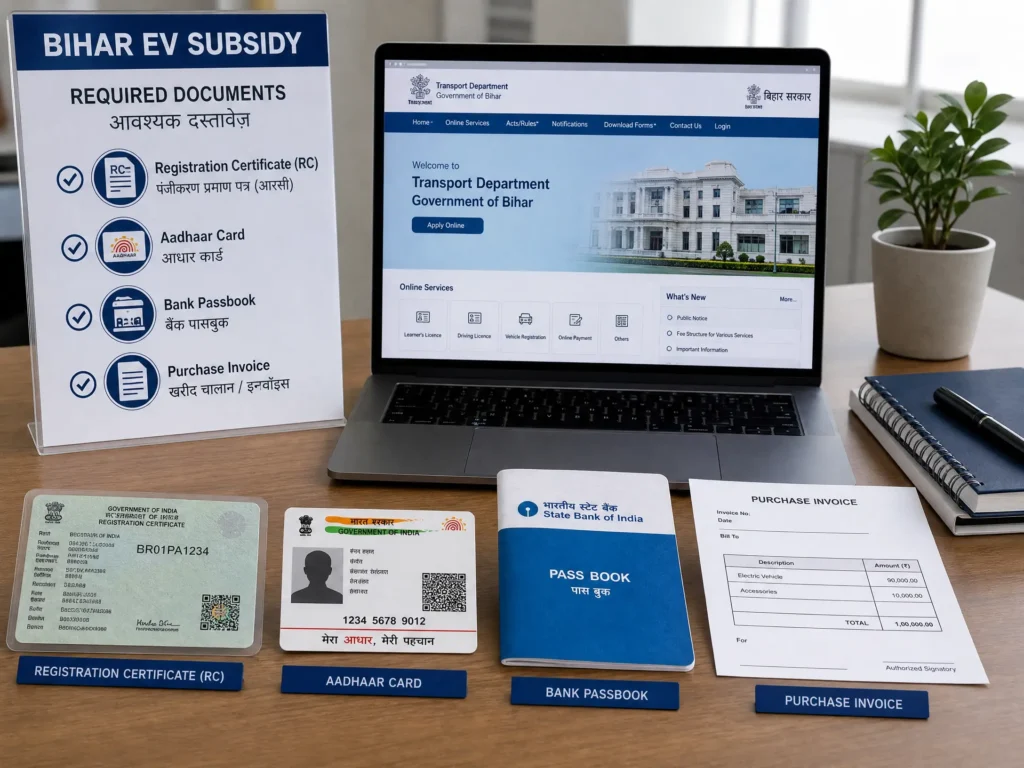
Before starting the online application, scan and organize the following documents.Ensure that files are clear, legible, and saved in standard PDF or JPEG formats according to portal limits:
- Final Purchase Invoice: The official bill generated by the authorized EV dealership showing the final price breakdown.
- Registration Certificate (RC): The official RC issued by the regional transport office (RTO) confirming your vehicle number.
- Battery Technical Certificate: Documentation specifying battery capacity, which is sometimes required or verified directly via the OEM profile database.
- Identity & Address Proof: The owner’s Aadhaar Card (ensure it is linked to the mobile number used for registration) and PAN card.
- Bank Details: A clear scanned copy of the first page of the owner’s bank passbook or a cancelled check. The name on the bank account must perfectly match the name on the RC.
- Caste Certificate: Required only for applicants claiming the higher SC/ST subsidy slabs.
Step-by-Step Guide: How to Claim Bihar EV Subsidy Online
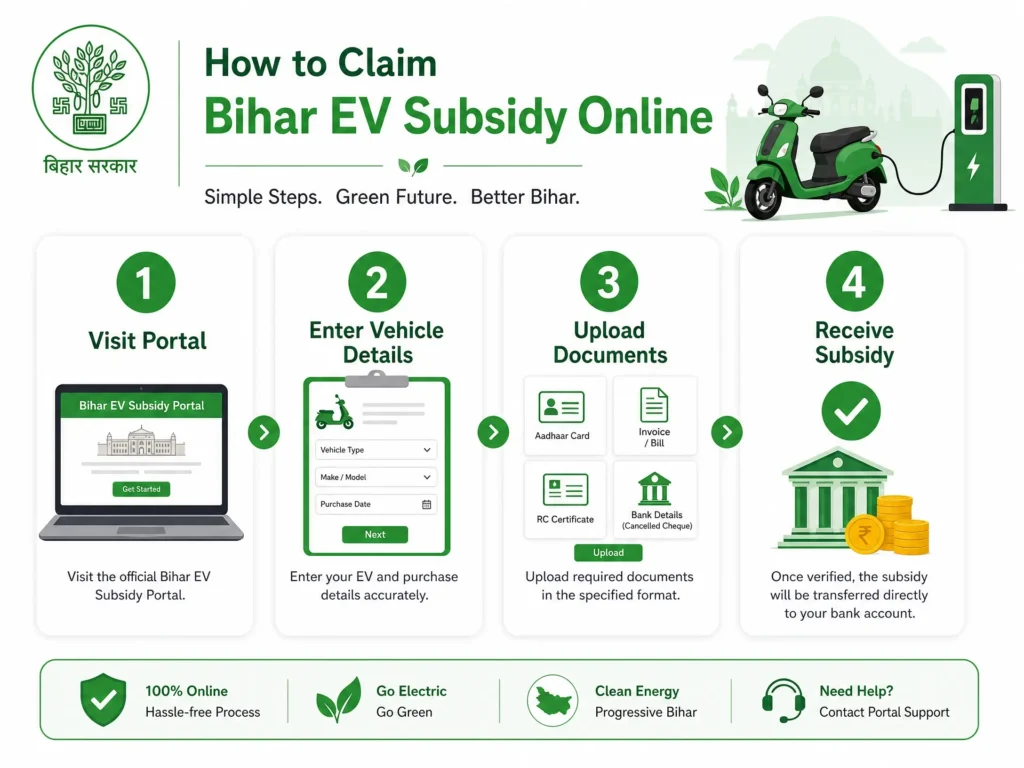
Crucial Portal Maintenance Notice: The official web portals designated for processing applications (
odtransportmis.nic.in/EVBihar/orodtransportmis.nic.in/BiharEV/) periodically undergo routine security migrations, structural upgrades, or server maintenance. If the portal appears unresponsive, check back within a few days or visit the primary Bihar State Transport Department page for redirected live links.
Once the portal is fully operational, follow these steps to file a claim:
Verify OEM and Model Eligibility:Pre-requisite.
Confirm that your vehicle model is registered on the Bihar EV portal by checking the active “OEM List” drop-down menu on the homepage.
Step 1. Access the Claim Interface: Navigate to the official portal (odtransportmis.nic.in/EVBihar/) and select the “Register / Apply” option under the Electric Vehicle Service tab.
Step 2. Input Vehicle and Chassis Identifiers: The portal will open an validation interface containing two mandatory fields. Input your official Vehicle Registration Number into the first field, and the last 5 digits of your vehicle’s Chassis Number into the second field. Click submit.
Step 3. Complete Mobile OTP Authentication: The central transport network will validate your entries against its VAHAN database repository. Once verified, the system generates a One-Time Password (OTP) sent via SMS to your Registered Mobile Number (RMN). Input this OTP to unlock the comprehensive application form.
Step 4.Verify Automatically Fetched Particulars: The form displays pre-filled technical data including vehicle model parameters, factory owner specifics, and regional RTO tags. Review these details carefully and click the declaration confirmation checkbox.
Step 5. Provide Bank Account Details: Enter your active banking details, including bank name, branch location, account number, and IFSC code. Double-check this data to prevent transfer failures.
Step 6. Upload Bank Passbook Documents: Upload the scanned image or file of your bank passbook’s front page or a cancelled check. Ensure all text fields, including the account number and IFSC print, are sharp and clear.
Step 7. Final Review and Submission: Read the digital declaration terms, mark your consent, and click “Submit”. The system will instantly generate a unique Application Number on screen. Save, screenshot, or print this credential for tracking purposes.
Post-Submission Tracking & Fund Disbursement
After submission, the application moves through an automated verification pipeline overseen by regional transport authorities.The process typically flows as follows:
- RTO Scrutiny: Regional Transport Officers review the physical uploaded records against centralized VAHAN data.
- Approval & Sanction: Once validated, the file moves to final financial sanction status. If an anomaly is found, the system reverts the application to the user to upload a clear bank document or fix text discrepancies.
- Disbursement Timeline: Approved claims are released via direct transfer within 30 to 45 working days, depending on active state treasury queues.
Tracking Application Status
To check the status of a claim, visit the portal’s homepage and click “Application Status”. Input your unique Application Number along with the vehicle registration markers to view the active stage of processing.
Tips for a Smooth Application Process
To minimize the risk of rejection or processing delays, keep these tips in mind:
- Aadhaar Linkage: Ensure your bank account is actively seeded with your Aadhaar identification for Direct Benefit Transfer (DBT) clearance.
- Time Windows: Submit your subsidy application within 90 days from the date displayed on your official registration card to prevent expiration issues.
- Avoid Overlaps: Do not use temporary or incorrect mobile numbers. Stick entirely to the primary mobile number tied to your vehicle registration record.
Conclusion
The Bihar Electric Vehicle Policy makes transitioning to green mobility financially rewarding. By preparing your documents in advance, tracking the state portal’s operational windows, and entering your vehicle details accurately, you can smoothly claim your cash back. Beyond the immediate personal savings, choosing electric contributes to cleaner air and a more sustainable future for the entire state.
If you have completed this process or ran into portal updates while applying, share your experience or drop a question in the comments below!