
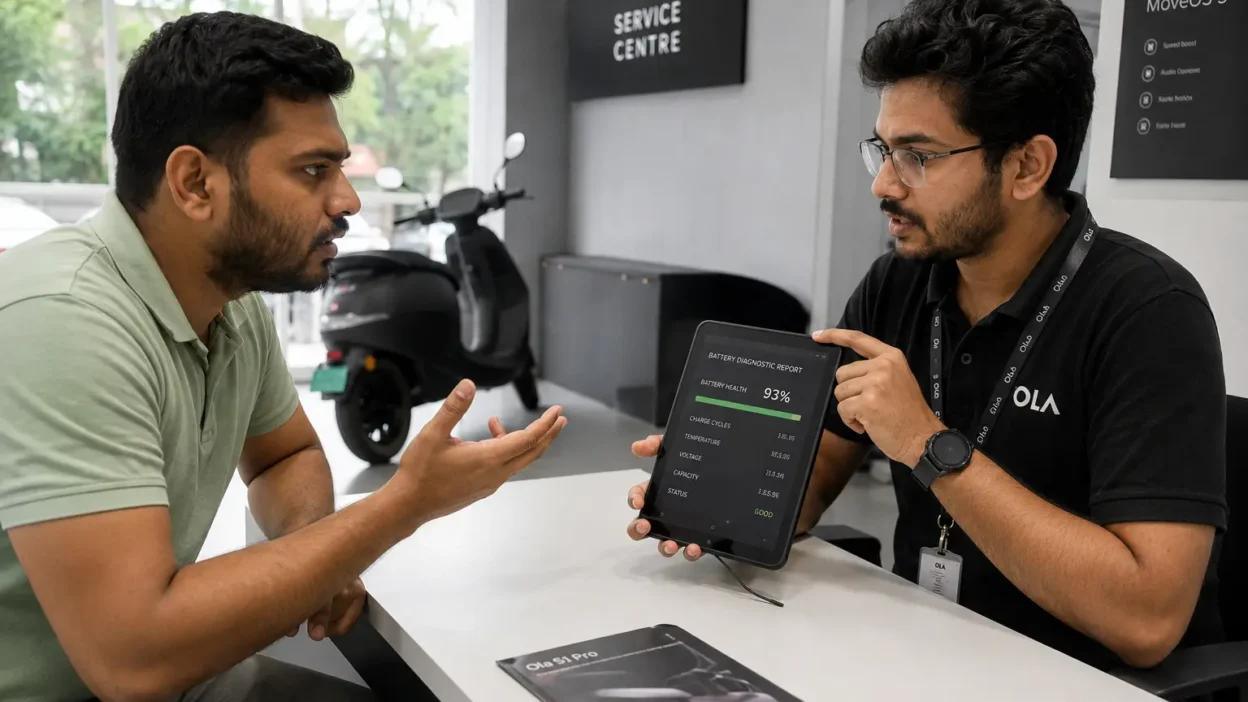
If a service centre has just told you your Ola scooter’s battery needs full replacement, and something about that conversation felt rushed or vague, trust that instinct. Battery replacement scams — where owners are pushed toward an expensive full pack replacement when a smaller repair or diagnostic step would have solved the problem — are common enough in India’s growing EV service ecosystem that it’s worth knowing exactly what to check before you approve anything. This guide walks through how these situations typically unfold, the questions that separate a genuine diagnosis from a pressured sale, and the practical steps that protect both your money and your scooter.
Why Ola Battery Replacement Scams Happen
Out-of-warranty battery replacement is expensive — often ₹65,000 or more depending on the model — which makes it an attractive upsell for service providers operating without strict oversight. A few structural reasons this problem exists:
- Information gap: Most owners have no technical background in battery diagnostics, so they have little basis to question a service advisor’s claim.
- Urgency pressure: A scooter that won’t charge or start feels like an emergency, and emergencies make people less likely to seek a second opinion.
- No published price list: Because Ola hasn’t released an official, fixed out-of-warranty replacement price, some providers quote inconsistently, making it hard for owners to know if a number is fair.
- Diagnostic opacity: Without a written, itemised report, it’s easy for a service centre to simply assert that a battery is “damaged” without showing supporting data.
None of this means every service centre is dishonest — most aren’t. But the conditions that make scams possible are real, and understanding them is the first step to avoiding one.
Common Ola Battery Replacement Scam Tactics
Recognising the pattern matters more than memorising a checklist. Watch for these situations:
- Replacement recommended without a written diagnostic. You’re told the battery is “dead” or “unrepairable” based on a quick visual check or a single test, with no data shown.
- Deep discharge treated as automatic replacement. A battery left at 0% for a period is immediately labelled as requiring full replacement, without any attempt at balancing or controlled recharging first.
- Vague technical language. Terms like “cell damage” or “BMS failure” are used without explaining which cells, what voltage readings triggered the conclusion, or what test was run.
- Pressure to decide immediately. You’re told the offer or price is only valid “today,” discouraging you from getting a second opinion.
- Inflated quotes compared to typical figures. A quote significantly above what other owners with similar issues have reported, without a clear explanation for the difference.
- No warranty offered on the replacement work itself, even though a paid, non-warranty repair should typically come with some service guarantee.
How to Verify Your Ola Battery Warranty Status
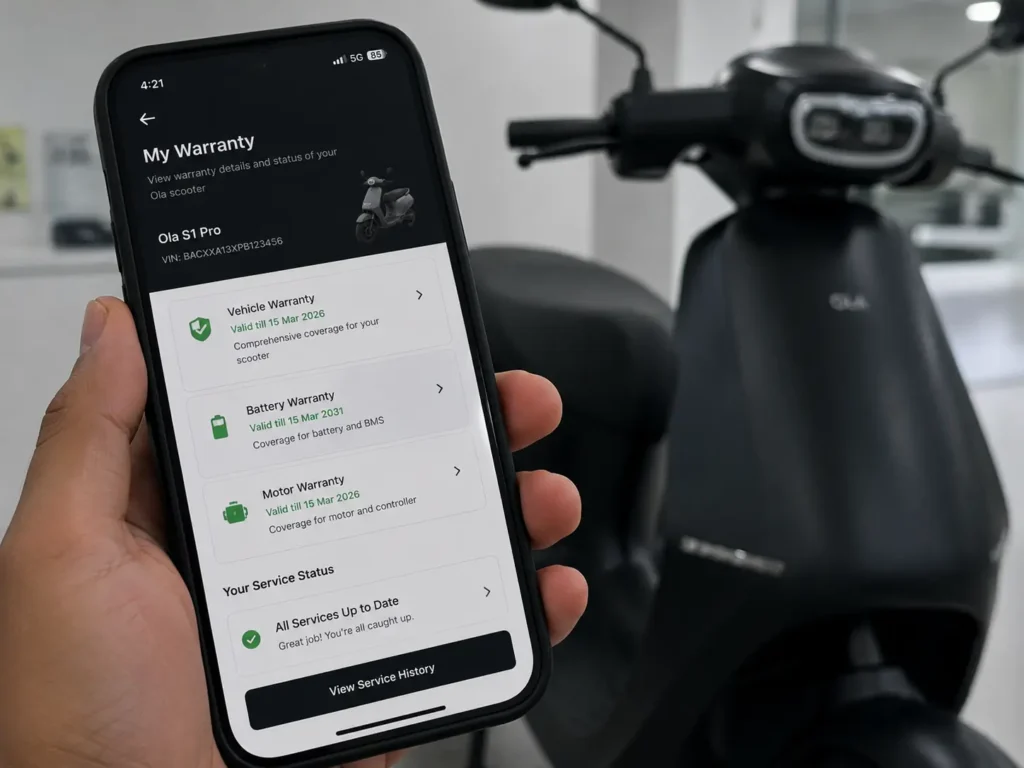
Before accepting that you’re out of warranty at all, check independently rather than relying solely on what a service advisor tells you.
- Check the Ola app — warranty and service history are usually visible under your vehicle’s account details.
- Look for top-up or extended warranty purchases you may have forgotten about, especially if the scooter was bought secondhand or the warranty was extended at the time of purchase.
- Confirm the warranty terms for your specific generation and model, since base warranty duration and coverage can differ between the S1, S1 Air, S1 Pro Gen 2, and S1 Pro Gen 3.
- Keep your original purchase and warranty documentation accessible, since warranty transfers to second owners are allowed but need to be verified against the vehicle’s records.
If a service centre tells you you’re out of warranty, it costs nothing to confirm that independently before agreeing to pay for anything.
Deep Discharge Misdiagnosis: A Common Scam Entry Point
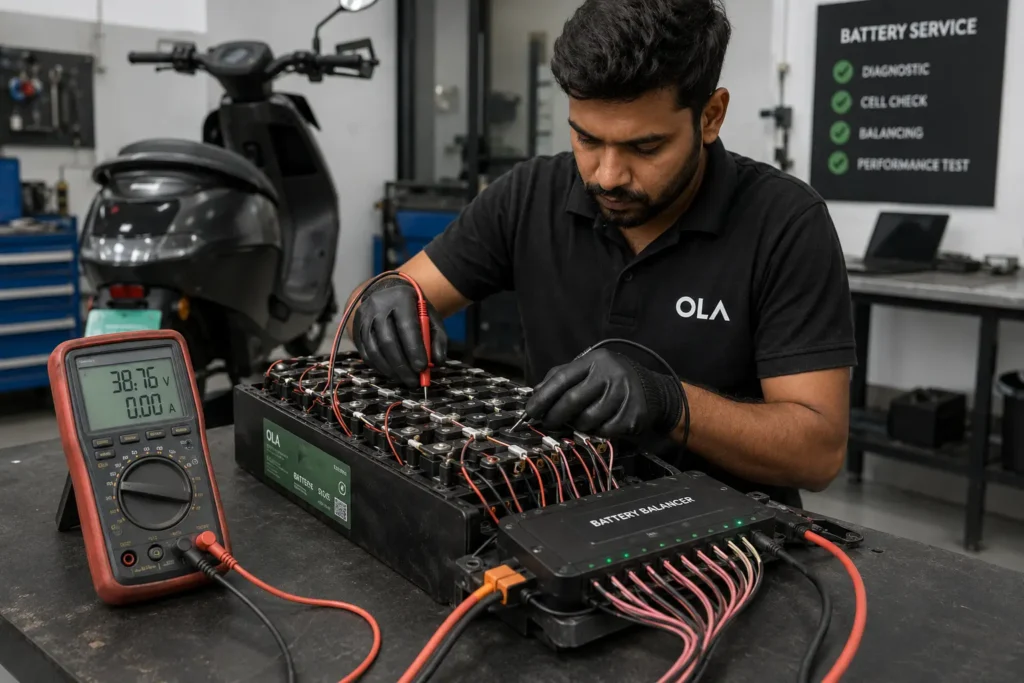
Deep discharge — where the battery has been left fully drained for an extended period — is one of the most frequently misused justifications for a full replacement quote.
Here’s what a proper process should look like:
- A diagnostic that checks individual cell voltages, not just the pack’s overall charge state
- An attempt at battery balancing or a controlled, slow recharge to see whether the cells recover before concluding the pack is unrecoverable
- A clear explanation of which specific cells or components failed to respond to restoration attempts, if replacement is still recommended afterward
If a service centre skips straight from “the battery was deep discharged” to “you need a new pack” without attempting restoration or showing diagnostic data, that’s a reasonable point to pause and ask more questions — or seek a second opinion.
For a full breakdown of what genuine replacement typically costs by model once it’s actually confirmed as necessary, this guide on Ola Scooter Battery Replacement Cost Out of Warranty is a useful reference point for comparing your quote against typical figures.
Questions to Ask Before Approving Battery Replacement
Bring this list with you, or ask over a call before you commit:
- Can I see a written diagnostic report, not just a verbal explanation?
- What are the individual cell voltage readings, and which cells specifically failed?
- Was battery balancing or a controlled recharge attempted before concluding replacement is necessary?
- Is my scooter genuinely out of warranty, and can you show me that in writing?
- What warranty comes with the replacement battery and the labour itself?
- Is this price consistent with what Ola or other authorised centres are currently charging for this model?
- Can I take a copy of the diagnostic report with me before deciding?
A service provider confident in their diagnosis will have no issue answering these directly. Reluctance or vague non-answers are worth treating as a signal to slow down.
How to Get and Read a Battery Health Diagnostic Report
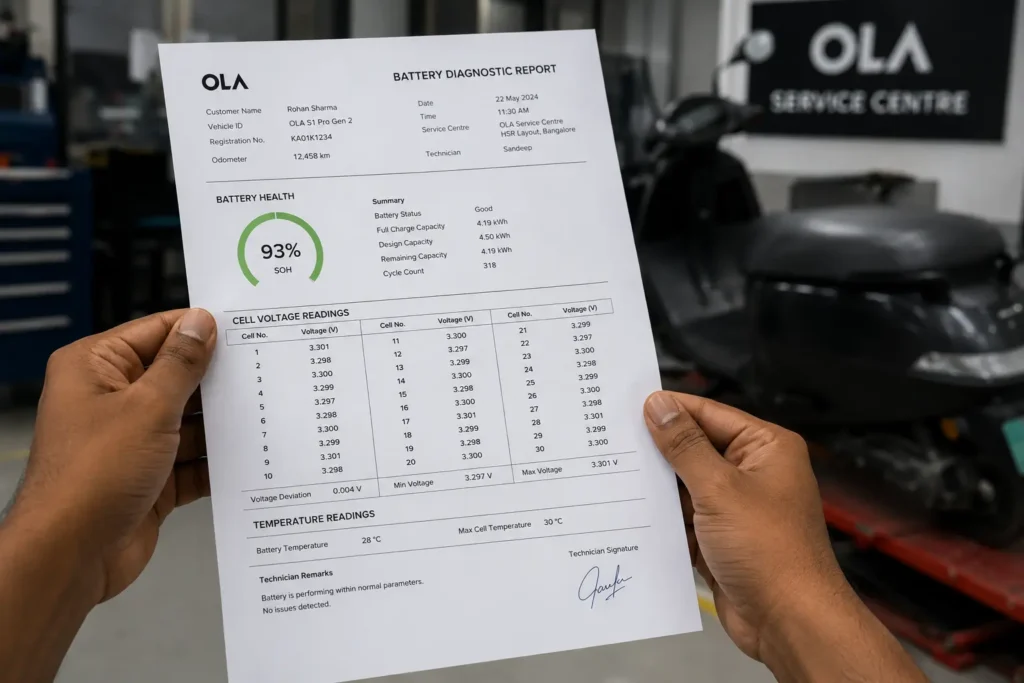
A genuine battery health report should include:
- Individual cell voltage readings across the pack, not just an aggregate percentage
- Overall capacity retention, showing how much of the original capacity the battery can still hold
- Any BMS fault codes, along with what those codes actually indicate
- A clear pass/fail or health percentage per cell group, not just the pack as a whole
If a report only says something like “battery health: poor” with no supporting numbers, ask for the underlying data. A one-line verdict without evidence isn’t a diagnostic report — it’s just an opinion.
Red Flags vs Genuine Diagnosis: Quick Comparison
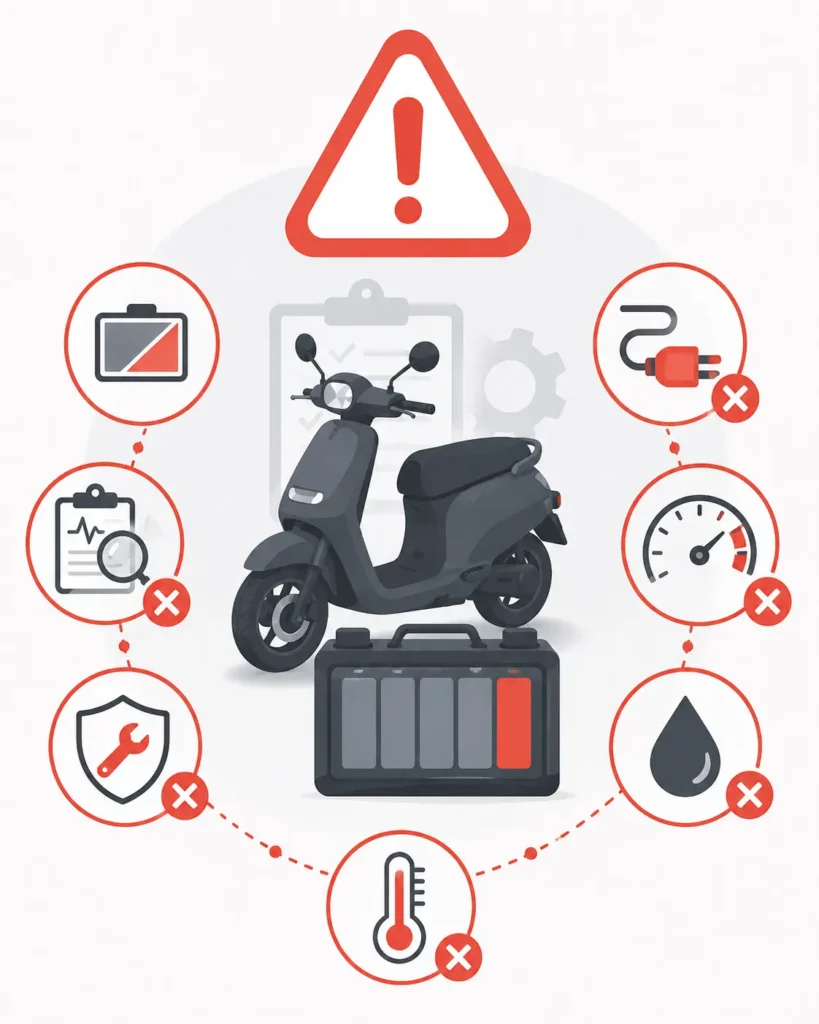
| Signal | Likely Genuine | Possible Scam Red Flag |
|---|---|---|
| Diagnostic report | Written, itemised, cell-level data | Verbal only, vague terminology |
| Deep discharge handling | Balancing or controlled recharge attempted first | Replacement recommended immediately |
| Time pressure | You’re free to take time and get a second opinion | “Today only” pricing or urgency tactics |
| Warranty verification | Checked and shown in writing | Assumed or dismissed without evidence |
| Post-repair warranty | Offered on the replacement work | None offered on a paid repair |
| Pricing | Broadly consistent with other reported quotes | Noticeably inflated with no clear justification |
Authorised Service Centre vs Independent Service Centre Risks
Both channels carry different risk profiles, and neither is automatically safer.
Authorised Ola service centres generally offer more standardised diagnostic processes and access to genuine parts, but pricing may be higher, and owners have still reported occasional pressure toward replacement over repair.
Independent EV service providers can offer lower prices and more willingness to attempt restoration rather than replacement, but quality, certification, and post-service warranty vary significantly between providers. Some are highly competent specialists; others are not.
In either case, the same protective steps apply: get a written diagnostic, ask specific questions, and don’t feel obligated to decide on the spot.
What to Do If You Suspect You’ve Been Scammed
- Request the diagnostic report in writing, even after the fact, if you weren’t given one at the time.
- Get a second independent inspection before agreeing to pay for a replacement you’re unsure about.
- Compare your quote against figures reported by other owners with similar issues and the same model.
- Escalate through Ola’s official customer support channels if you believe you were misled by an authorised service centre.
- Document everything — messages, invoices, and any verbal claims made — in case you need to dispute the charge later.
Tips to Protect Yourself Before Visiting a Service Centre
- Know your scooter’s model, generation, and battery capacity before you go in, so you can evaluate whether a quote is proportionate.
- Check your warranty status independently through the Ola app beforehand.
- Ask for a written diagnostic report as a standard first step, not an optional extra.
- Don’t approve high-value repairs the same day you first hear about them unless it’s genuinely urgent.
- Keep a record of your scooter’s charging habits and any recent deep discharge events, since this context helps you evaluate whether the explanation you’re given makes sense.
Frequently Asked Questions
How do I know if my Ola battery replacement quote is a scam? Look for the absence of a written, cell-level diagnostic report, pressure to decide immediately, and a price that’s noticeably higher than what other owners with similar issues have reported.
Can a deep discharged battery always be restored? Not always, but restoration should be attempted and documented before a service centre concludes replacement is the only option.
Is it normal to be quoted a different price at different service centres? Some variation is normal due to labour and regional pricing, but large, unexplained differences are worth questioning.
Should I always get a second opinion? For any quote involving full battery replacement, yes — it costs little and can save a substantial amount if the first diagnosis was inaccurate or incomplete.
Do authorised Ola service centres ever push unnecessary replacements? It’s possible, though less common than with unverified independent providers. A written diagnostic report is the best safeguard regardless of where you go.
What should a genuine battery health report include? Individual cell voltage readings, overall capacity retention, and any specific BMS fault codes — not just a general health percentage.
Can I request my diagnostic data if I wasn’t given it initially? Yes, you can and should ask for it in writing, even after the fact, especially if you’re disputing a charge.
Is battery balancing the same as battery replacement? No. Balancing is a diagnostic and corrective step that can sometimes resolve issues without replacing the battery at all.
What if the service centre refuses to show me diagnostic data? Treat that as a significant red flag and seek an inspection elsewhere before approving any payment.
Where can I check typical Ola battery replacement costs to compare against my quote? The Ola Scooter Battery Replacement Cost Out of Warranty guide breaks down typical pricing by model, which is a useful benchmark when evaluating any quote you receive.
Conclusion
Most Ola service interactions are legitimate, but the financial stakes of a battery replacement make it worth being deliberate rather than reactive. Ask for a written diagnostic before agreeing to anything, understand what deep discharge does and doesn’t mean for your battery’s future, and don’t let urgency push you into a decision you haven’t had time to verify. A little friction upfront — a second opinion, a documented report, a few direct questions — is a small price compared to an unnecessary replacement.