
If you’ve been scrolling through car forums or asking your neighbourhood Tata showroom about an affordable electric SUV, chances are the Punch EV has already come up. It’s been one of the more talked-about names in India’s compact EV space, and the 2026 facelift has given it a fresh reason to be on your shortlist.
I spent time going through the updated variants, real-world range data, and owner feedback to put together this Tata Punch EV review — no marketing fluff, just what actually matters before you put your money down.
Tata Punch EV Price in India 2026
The facelifted Punch EV now starts at ₹9.69 lakh (ex-showroom) and goes up to around ₹12.59 lakh for the top-spec variant. Tata has also introduced a Battery-as-a-Service (BaaS) option, which brings the entry price down to roughly ₹6.49 lakh — you pay less upfront and cover the battery cost through a per-km rental instead.
There are five trims to choose from:
- Smart
- Smart+
- Adventure
- Empowered
- Empowered+ S
If you’re someone who just wants a practical city EV without chasing every feature, the Smart+ 40 kWh trim is where the value really shows. If your budget stretches a bit further, the Empowered variant adds enough tech and safety kit to feel worth the jump.
For a full budget comparison, check out our Best Electric Car Under 10 Lakh India 2026 and Best Electric Car Under 15 Lakh India guides.
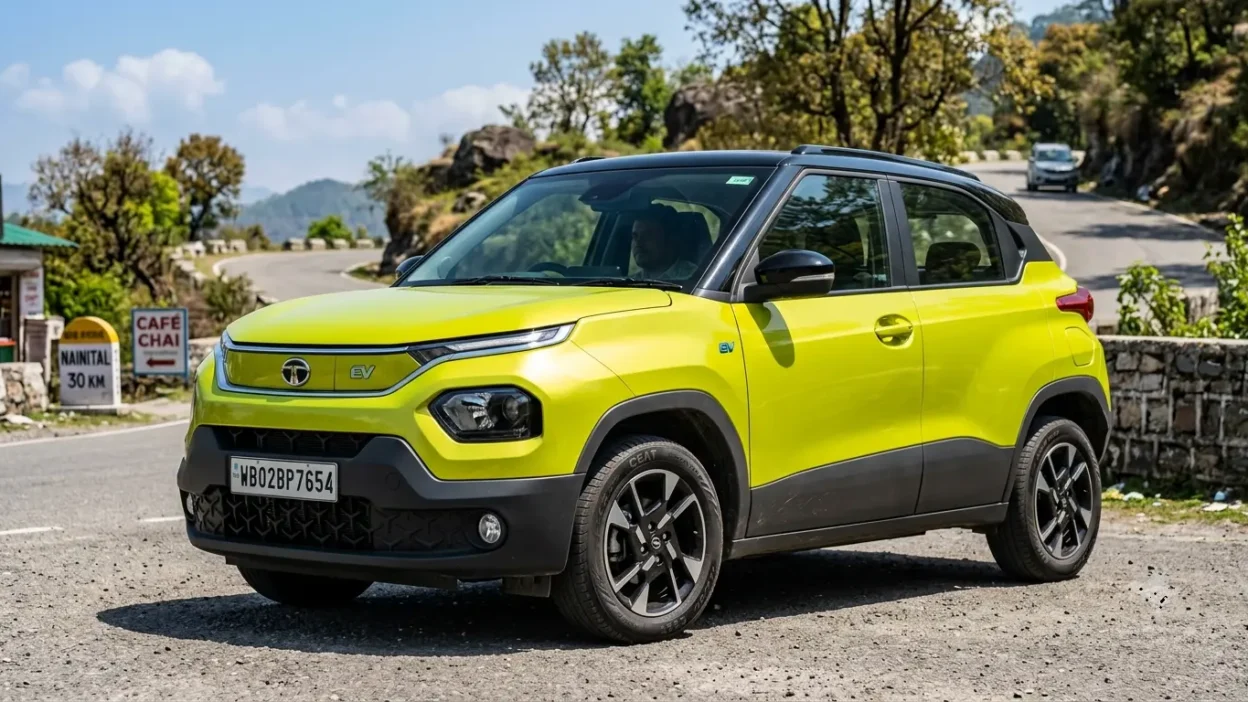
Design & Exterior — Same Charm, Sharper Details
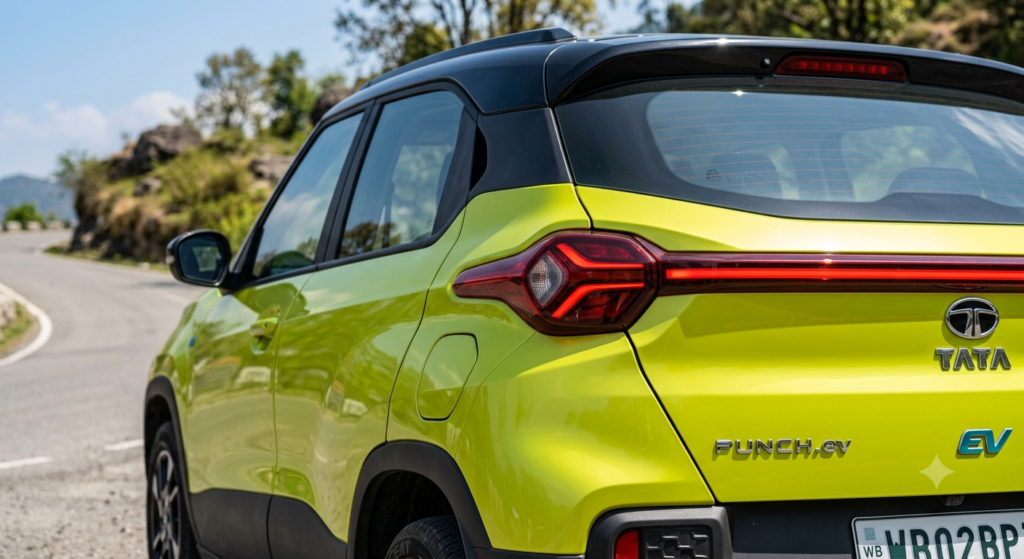
The Punch EV hasn’t reinvented itself visually, and that’s probably a smart call — the original design already aged well. For 2026, Tata has added connected LED tail lamps on higher trims, dual-tone paint options, and restyled wheel covers. The base Smart trim keeps things simple with halogen projector headlamps and steel wheels, while the top trims get LED projector headlamps, roof rails, and cornering fog lamps.
It still sits in that sweet spot — compact enough for tight city lanes, but chunky enough to not feel like a budget hatchback wearing an SUV badge.
Range & Battery — What You’ll Actually Get
This is usually the first question everyone asks, so let’s get into it properly.
The 2026 Punch EV comes with two battery options:
| Battery | ARAI Range | Real-World (C75) Range |
|---|---|---|
| 30 kWh | 365–375 km | 260–275 km |
| 40 kWh | Up to 468 km | 335–355 km |
That real-world figure matters more than the ARAI number for daily planning, and 335-355 km on the bigger battery is genuinely usable for most Indian city commuters, with room for the occasional weekend trip out of town.
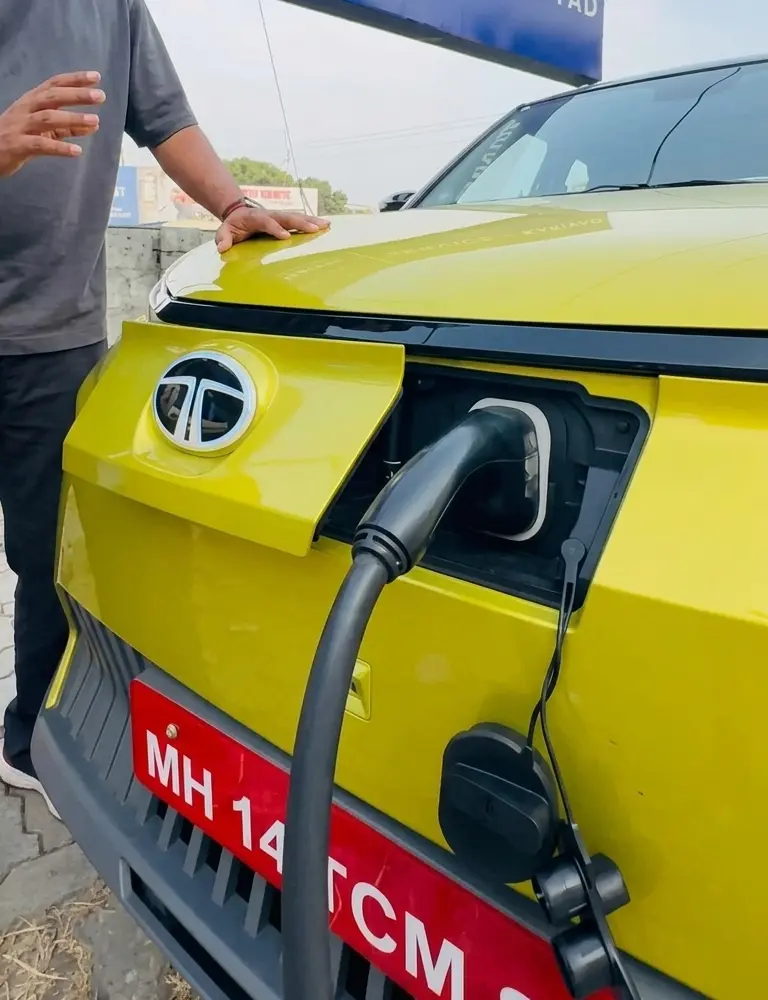
Charging is quicker too — with DC fast charging, a 20–80% top-up takes about 26 minutes, and even a quick 15-minute charge can add roughly 135 km of real-world range on the 40 kWh version. That’s a meaningful upgrade if you’ve ever been the person anxiously watching a charging percentage tick up on a highway trip.
Curious how this compares to the segment leader? Read our Tata Nexon EV Long Term Review.
Interior, Features & Tech
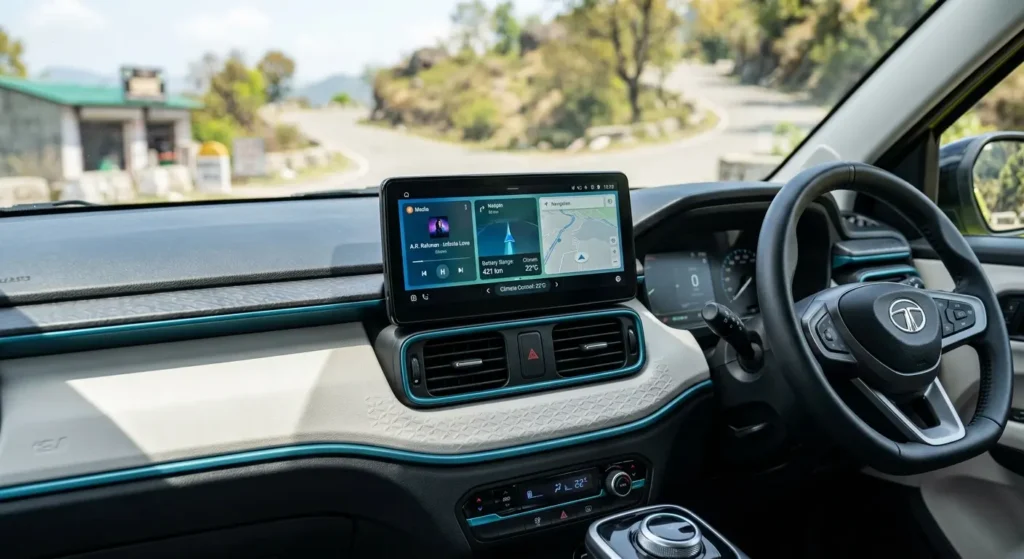
Step inside and the cabin feels more premium than the price tag suggests. The higher variants get a 10.25-inch touchscreen with wireless Android Auto and Apple CarPlay, a 10.25-inch digital driver display, and Tata’s iRA.ev connected car app with over 60 features, including smartwatch connectivity.
Some genuinely useful bits — a 360-degree camera, blind-spot monitor, ventilated front seats, and a cooled glove box — are unfortunately locked to the Empowered and Empowered+ trims. If those features matter to you, budget for the higher variant upfront rather than feeling shortchanged later.
Performance & Driving Experience
The 40 kWh variant runs a Permanent Magnet Synchronous Motor producing 95 kW and 154 Nm of torque, with a 0–100 km/h time of around 9.0 seconds. It’s not a car built for drag strips, but for city and highway use, the power delivery feels immediate and smooth — one of the genuine joys of driving an EV instead of a petrol hatchback in stop-start traffic.
The 30 kWh variant is tuned more for in-town efficiency, with 65 kW of power, and comes with Eco, City and Sport drive modes on the 40 kWh version for a bit more flexibility depending on your mood or route.
Ride quality has also come in for praise from early owners, particularly around how well it soaks up potholes and uneven patches — something that matters a lot more on Indian roads than a 0-100 figure ever will.
For official specifications and the latest pricing updates, you can check Tata Motors’ official EV page
Safety
Tata has kept safety as a strong point across the range, with 6 airbags as standard, ESP, hill hold assist, and ISOFIX child seat mounts. There’s also SOS calling and a high-beam assist feature built into the connected tech suite.
Tata Punch EV: Pros and Cons
Pros:
- Genuinely usable real-world range on the 40 kWh variant
- BaaS option lowers the entry barrier significantly
- Fast charging is a real highlight (135 km in 15 minutes)
- Strong safety kit as standard
- Comfortable ride quality suited to Indian roads
Cons:
- Key features locked to top two trims
- Rear AC vents still missing
- 30 kWh variant’s real-world range may feel limiting for longer commutes
- 0-100 km/h time isn’t segment-quickest
Tata Punch EV vs Competitors
The Punch EV competes directly with the Citroen eC3 and sits as a more affordable entry point compared to the Tata Nexon EV, Mahindra XUV 3XO EV, and MG Windsor EV. If your budget is tight and daily usage is mostly city-based, the Punch EV holds its own well against all of these.
See our detailed Tata Punch EV vs Tata Tiago EV Comparison and Tata Nexon EV vs MG Windsor EV Comparison for a side-by-side breakdown.
If you’re weighing the BaaS pricing model, our Electric Car Battery Rental (BaaS) Explained India article breaks down whether it makes financial sense for you.
Verdict: Should You Buy the Tata Punch EV in 2026?
If you want an electric SUV that’s practical for daily city driving, doesn’t demand a huge upfront investment thanks to the BaaS option, and comes backed by Tata’s now well-established EV service network, the Punch EV remains one of the smartest choices in its segment. Go for the 40 kWh Smart+ or Adventure trim if you want the best mix of range and value, and stretch to the Empowered trim only if those extra convenience features genuinely matter to your daily routine.
Frequently Asked Questions
What is the real-world range of the Tata Punch EV 2026? The 40 kWh variant offers a real-world range of approximately 335–355 km, while the 30 kWh variant offers around 260–275 km.
What is the on-road price of the Tata Punch EV? Ex-showroom prices range from ₹9.69 lakh to ₹12.59 lakh, with a BaaS option available from ₹6.49 lakh.
How long does the Tata Punch EV take to charge? With DC fast charging, the 40 kWh variant can go from 20-80% in about 26 minutes.
Does the Tata Punch EV have wireless Android Auto and Apple CarPlay? Yes, but only on the Empowered and Empowered+ S variants. Lower trims get wired connectivity.
Have questions about the Tata Punch EV or want a comparison with another model? Drop a comment below and I’ll help you decide.