
A first drive review tells you how a car feels in 20 minutes. A long term review tells you how it feels after the new-car smell has worn off, after the first service visit, after a few hundred charging cycles, and after the excitement of “I bought an EV!” has settled into daily routine. That’s exactly the gap this Tata Nexon EV long term review tries to fill.
The Nexon EV has been one of India’s best-selling electric cars for a while now, and with good reason — it’s built on a familiar platform, priced sensibly, and backed by Tata’s growing EV network. But does it hold up once you’re a few thousand kilometres in? Let’s get into it.
Tata Nexon EV Price & Variants in 2026
The Nexon EV is priced between ₹12.49 lakh and ₹17.69 lakh (ex-showroom), depending on the variant and battery pack. On-road prices, once you factor in registration, insurance, and local charges, typically land somewhere between ₹14.4 lakh and ₹20.2 lakh.
There are five trim levels to pick from:
- Creative
- Fearless
- Empowered
- Empowered+
- Empowered+ A
Two battery options are on offer — a 30 kWh Medium Range pack and a 45 kWh Long Range pack, often referred to in Tata’s lineup as the “45” variant. If long-term ownership and fewer range anxiety moments matter to you (and they should, if you’re keeping this car for years), the 45 kWh pack is worth the extra spend.
Not sure if the Nexon EV fits your budget? Compare it in our Best Electric Car Under 15 Lakh India roundup.
Real-World Range: What Changes After Months of Driving
This is where a long term perspective actually matters, because claimed figures and lived experience rarely match up.
| Battery | Claimed Range (ARAI/MIDC) | Real-World Range |
|---|---|---|
| 30 kWh (Medium Range) | 275 km | ~200–220 km |
| 45 kWh (Long Range/45) | 489 km | ~310–330 km |
In daily city use — traffic, AC running most of the time, some highway stretches — most long-term owners report the 45 kWh variant settling comfortably into the 300+ km range per charge, which lines up well if your weekly routine involves commuting plus the occasional out-of-city trip.
What’s worth noting over time is that range doesn’t stay static. Battery performance can dip slightly in extreme summer heat, and charging habits (frequent fast-charging vs. mostly home AC charging) do influence long-term battery health, though nothing dramatic enough to change your day-to-day usability within the first few years.
If budget is a bigger factor than range, our Tata Punch EV Review 2026 in Hindi covers Tata’s more affordable EV alternative.
Charging Experience Over Time
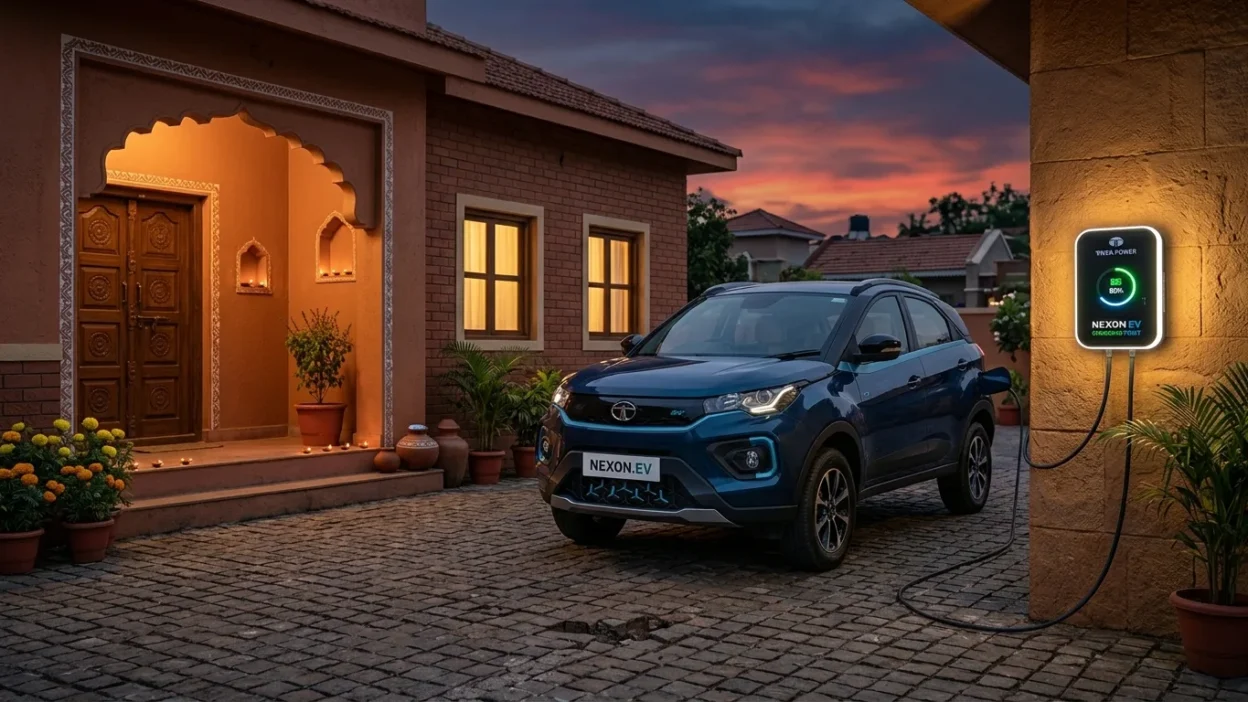
With a DC fast charger, the Nexon EV can go from around 10% to 80% in under an hour, which is genuinely convenient if you’re charging at a mall or office parking lot while running errands. For home charging, a 7.2 kW AC charger takes roughly 4.3 to 6 hours depending on the battery variant — ideal for overnight charging, and this becomes second nature within the first month of ownership.
One thing long-term owners consistently mention: charging infrastructure has visibly expanded, with networks like Jio-bp Pulse and Tata Power expanding their DC fast-charging footprint. That said, planning ahead for longer trips is still a habit you’ll need to build, especially outside major cities.
Planning a long-distance EV trip? Our Electric Car Charging Cost vs Petrol Comparison breaks down the real running cost difference.
Design & Cabin — Does It Still Feel Fresh After Daily Use?
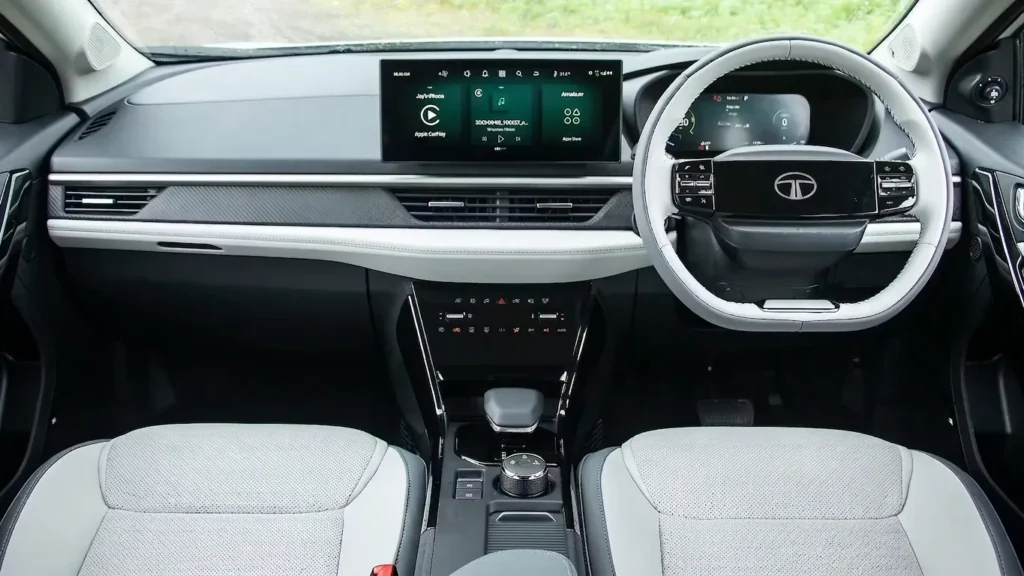
The Nexon EV’s design has aged well, helped by the connected LED DRLs and the now-familiar “welcome and goodbye” light sequence that still gets noticed by neighbours months in. The cabin remains one of the more spacious in its segment, with decent boot space for a compact SUV and enough rear-seat room for daily family use.
Build quality holds up reasonably well over time — panel fit, switchgear, and the touchscreen (on most variants) don’t feel like they’re deteriorating with regular use, though a few owners have flagged occasional infotainment lag after extended use, which is worth being aware of rather than a dealbreaker.
Ride Quality & Driving Experience
Ride comfort has always been a Nexon strength, and the EV version carries that forward — it’s firmer than the ICE version due to the added battery weight, but never uncomfortable. Bad roads and potholes are handled with confidence, and high-speed stability holds up well on highway stretches, which matters more once you’ve put a few thousand kilometres of mixed driving behind you.
Ground clearance sits at 190mm on the Long Range variant and 205mm on the Medium Range — both comfortable for Indian road conditions, including the occasional unpaved patch or speed breaker that catches you off guard.
The steering stays light and easy in city traffic, and the instant torque delivery typical of EVs makes daily driving genuinely enjoyable rather than a chore — something that doesn’t fade even after the initial excitement wears off.
Service Costs & After-Sales Experience
This is where long-term ownership stories get more honest. Approximate 5-year service costs for the Nexon EV sit around ₹7,200, which is low compared to a petrol or diesel equivalent — no oil changes, fewer moving parts, lower routine maintenance.
That said, after-sales service is the one area where owner feedback is mixed. Some long-term owners have flagged inconsistent response times from service centres and occasional feature glitches that needed revisits. It’s not a dealbreaker, but if you’re buying in a smaller city, it’s worth checking how established the local Tata EV service network is before committing
Safety Over the Long Run
All Nexon EV variants, including the newer 45 kWh Long Range versions, carry a 5-star BNCAP safety rating, with 6 airbags standard across the range. For a family car you’re planning to keep for years, this consistency in safety standards across trims is reassuring and one of the stronger arguments in the Nexon EV’s favour.
Tata Nexon EV: Long Term Pros and Cons
Pros:
- Real-world range on the 45 kWh variant comfortably covers daily use plus occasional trips
- Low 5-year service costs compared to ICE cars
- Ride quality holds up well on Indian roads over time
- 5-star BNCAP safety rating across variants
- Expanding public charging network makes ownership easier each year
Cons:
- After-sales service experience varies by city and dealership
- Occasional infotainment lag reported after extended use
- Medium Range variant’s real-world range may feel limiting for larger commutes
- Battery performance can dip slightly in peak summer heat
Tata Nexon EV vs Rivals
The Nexon EV competes with the Hyundai Creta Electric, Kia Syros EV, Mahindra BE 6, and Mahindra XUV 3XO EV. Compared to the Mahindra XUV400, long-term owners generally note that the Nexon EV offers a more feature-loaded package, while the XUV400 counters with more interior space.
See how it stacks up in our Tata Nexon EV vs MG Windsor EV Comparison and Best 7 Seater Electric Car India 2026 if you need more room for the family.
For the latest official specifications and ongoing offers, check Tata Motors’ official Nexon EV page and BNCAP’s published crash test ratings for verified safety data.
Verdict: Does the Nexon EV Hold Up Long Term?
After factoring in real-world range, service costs, and how the car feels once the new-car phase wears off, the Nexon EV remains a solid long-term ownership choice — provided you go for the 45 kWh variant and do a bit of homework on your local service network beforehand. It’s not a flawless ownership experience, but the fundamentals — safety, running costs, and day-to-day usability — hold up well enough to justify its position as one of India’s most popular electric SUVs.
Frequently Asked Questions
Is the Tata Nexon EV reliable for long term ownership? Most long-term owners report reliable day-to-day performance, with the main variability being after-sales service quality, which differs by city and dealership.
What is the real-world range of the Tata Nexon EV after months of use? The 45 kWh Long Range variant typically delivers 310–330 km in real-world mixed driving, while the 30 kWh Medium Range variant delivers around 200–220 km.
How much does servicing a Tata Nexon EV cost over 5 years? Approximate 5-year service costs are around ₹7,200, notably lower than petrol or diesel equivalents.
Does battery performance drop over time? Some range dip is normal in extreme summer heat and with frequent fast-charging, but it hasn’t significantly affected usability for most long-term owners within the first few years.
Which Tata Nexon EV variant is best for long term use? The 45 kWh Long Range variant in the Fearless or Empowered trim offers the best balance of range, features, and value for long-term ownership.
Own a Tata Nexon EV and have your own long-term experience to share? Drop it in the comments — it helps future buyers make a more informed decision.