
Few nameplates in Indian automotive history carry the emotional weight the Sierra does. For an entire generation, it was the boxy, glass-roofed SUV that defined a certain kind of aspiration. Tata brought it back as a petrol model first, and now — officially launched on 30 June 2026 — the electric version has arrived. This Tata Sierra EV first look review covers what’s confirmed at launch, and whether the nostalgia holds up against genuinely tough 2026 competition.
Tata Sierra EV Price in India 2026
The Sierra EV launched at an ex-showroom price starting from ₹18.79 lakh, going up to ₹25.99–26.48 lakh for the top-spec Quad-Wheel-Drive (QWD) variant, spread across five to eight variant configurations depending on how you count battery and drivetrain combinations.
Comparing it to Tata’s other premium EV? Read our Tata Harrier EV Review.
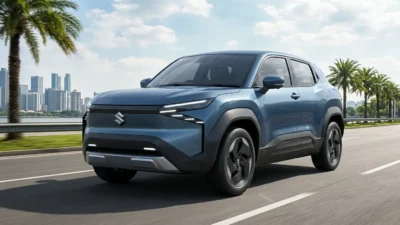
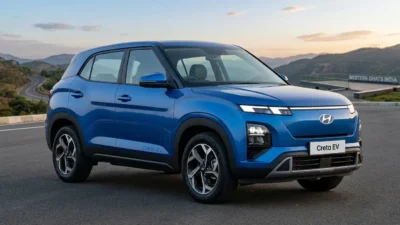
This positions it precisely where Tata wanted — sitting between the Curvv EV and the flagship Harrier EV in the brand’s growing electric lineup, and priced to go head-to-head with the Hyundai Creta Electric, Mahindra BE 6, and Maruti Suzuki e Vitara.
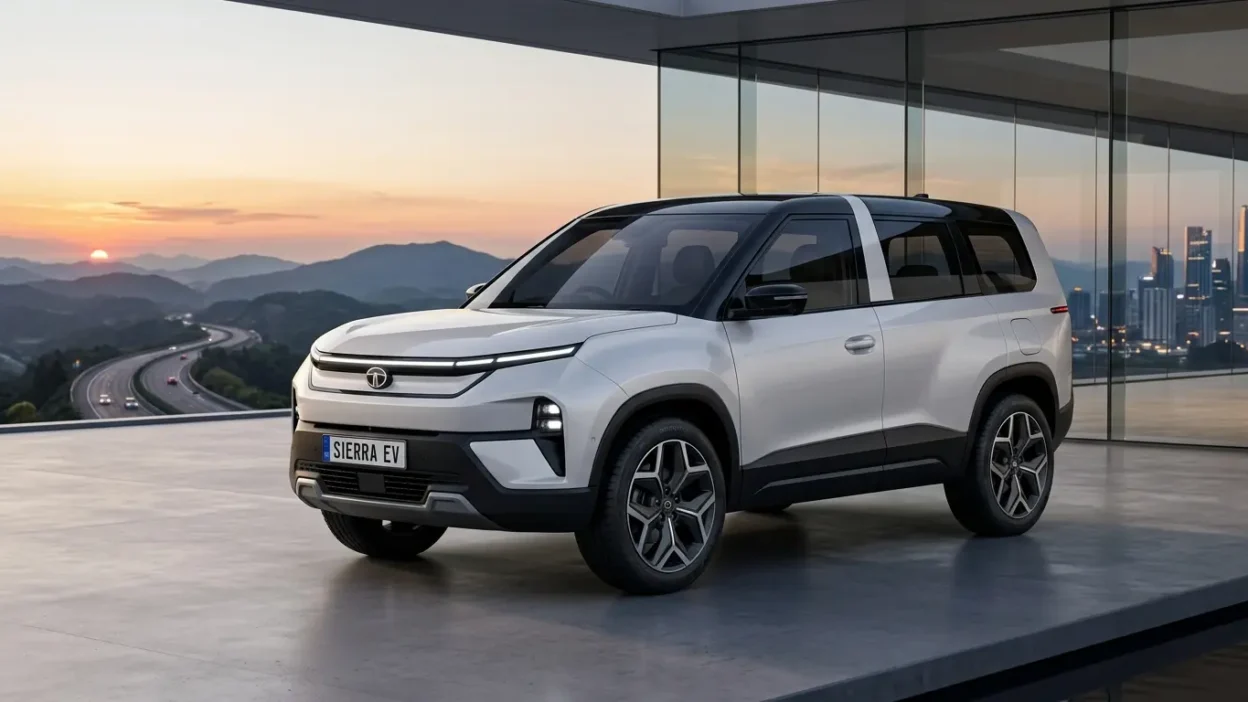
Design — The Glass House Returns
Tata has been remarkably faithful to the original Sierra’s design language and the 2023 concept car that previewed this EV. The signature “glass house” aesthetic — large glass panels and a boxy, upright greenhouse — has been reworked with EV-specific styling cues while keeping that unmistakable silhouette intact. High ground clearance carries over too, preserving the rugged approach and departure angles the original Sierra was known for.
It’s a design that leans hard into 90s nostalgia while wrapping it in genuinely modern EV proportions — a closed-off front fascia, sharper lighting elements, and a stance that looks distinctly different from anything else currently on Indian roads.
Range & Battery — Genuinely Segment-Leading Numbers
The Sierra EV is built on Tata’s Acti.EV+ architecture and offers two battery pack options:
| Battery | Claimed Range (MIDC) | Drivetrain |
|---|---|---|
| 63 kWh | 535–565 km | RWD (standard) |
| 75 kWh | Up to 665 km (RWD) / 624 km (QWD/AWD) | RWD or Dual-Motor QWD |
Rear-wheel drive is standard across the range, while the larger 75 kWh battery is also available with a dual-motor, quad-wheel-drive setup producing 504 Nm of torque — a genuine standout, since AWD capability is still relatively rare in this price bracket for Indian-market EVs.
As always, treat these MIDC figures as a ceiling rather than a guarantee — early estimates from pre-launch testing suggested a more realistic real-world range in the 400-450 km range for mixed driving, which is still comfortably competitive against rivals.
Want to see how this stacks up against Mahindra’s AWD offering? Check our Mahindra BE 6 Review.
Charging Time & Cost
Tata claims the Sierra EV’s DC fast charging can add 263 km of range in just 15 minutes — one of the fastest charging claims in the segment right now. The Sierra EV also supports Vehicle-to-Load (V2L) and Vehicle-to-Vehicle (V2V) charging, meaning it can power external devices like camping gear and laptops, or even act as a mobile power source to charge another stranded EV — a genuinely useful feature for road-trip and outdoor-adventure use cases that fits the Sierra’s rugged brand identity well.
Tata is also backing the battery with a lifetime warranty, a commitment that’s becoming something of a signature across Tata’s newer EV launches.
Interior, Features & Tech
The cabin is where the Sierra EV tries hardest to justify its premium pricing. It gets a triple-screen dashboard, Level 2 ADAS, and a 12-speaker sound system, alongside an Android-based infotainment OS with built-in voice AI integration. Reports around the launch also point to first-in-segment “Lounge” seating aimed at maximising rear-seat comfort — a deliberate move to position the Sierra EV as much a chauffeur-friendly premium SUV as a rugged adventure vehicle.
Tata has confirmed the Sierra EV comes in a 5-seat configuration, with spacious seating designed around comfort rather than outright cargo-hauling capacity.
Curious how the cabin tech compares to Mahindra’s XEV 9e? Read our Mahindra XEV 9e Review.
Safety
The Sierra EV comes with Level 2 ADAS, a 360-degree camera system, and the structural benefits of Tata’s Acti.EV+ platform, which has generally performed well in crash testing across the brand’s recent EV launches. Official BNCAP ratings for the Sierra EV specifically weren’t confirmed at the time of launch — worth checking for an update once independent crash-test results are published.
A Note on Special Editions
Shortly after the standard launch, Tata previewed a Sanctuary Edition — a genuinely wild variant aimed at wildlife safari and off-road use, featuring an open cabin with the roof and middle pillars removed, a roll cage, all-terrain tyres, a heavy-duty bull bar, an electric winch, stadium-style third-row seating for wildlife viewing, and waterproof leatherette upholstery. Tata’s Chief Commercial Officer has also confirmed that further special editions for both the Sierra ICE and Sierra EV are under consideration for release by the end of 2026 — worth keeping an eye on if you’re not in a rush to buy immediately.
Tata Sierra EV: First Look Pros and Cons
Pros:
- Genuinely distinctive, nostalgia-driven design that stands out on the road
- Segment-leading claimed range (up to 665 km) on the 75 kWh RWD variant
- Rare AWD/QWD availability in this price bracket
- Fast charging claim of 263 km in 15 minutes
- V2L and V2V charging capability — genuinely useful, not just a gimmick
- Lifetime battery warranty
Cons:
- Real-world range likely to fall meaningfully short of the claimed 665 km figure
- Independent crash-test ratings not yet confirmed at launch
- Premium pricing puts the top QWD variant close to ₹26 lakh
- 5-seat-only configuration may not suit buyers wanting a 3-row option
- New nameplate means limited long-term reliability data so far
Tata Sierra EV vs Competitors
At launch, the Sierra EV goes up directly against the Hyundai Creta Electric, Mahindra BE 6, and Maruti Suzuki e Vitara — all vying for the same premium electric SUV buyer. Compared to the Mahindra BE 6, the Sierra EV leans more into comfort, nostalgia, and lifestyle appeal, while the BE 6 pushes harder on outright performance and sporty design. If a more rugged, glass-house aesthetic with genuine adventure-ready features (V2L, all-terrain capability via the Sanctuary Edition) appeals to you, the Sierra EV has a clear identity advantage.
Weighing performance against comfort? Our Mahindra BE 6 Review and Mahindra XEV 9e Review cover both ends of that spectrum.
See the full picture in our Tata Harrier EV Review if you want a larger, more conventional SUV shape from Tata’s lineup.
For official specifications and the latest variant pricing, check Tata Motors’ official Sierra EV page.
Verdict: First Impressions on the Tata Sierra EV
As a first look, the Sierra EV lands as one of the more genuinely interesting EV launches of 2026 — it backs up its nostalgia play with real substance: strong range figures, AWD availability, fast charging, and thoughtful EV-specific features like V2L. Whether it’s actually worth the premium over rivals like the BE 6 or Creta Electric will come down to independent range testing and real-world reliability data over the coming months — but on specs and first impressions alone, it’s a launch worth taking seriously if you’re shopping in this segment.
Frequently Asked Questions
What is the launch price of the Tata Sierra EV? The Sierra EV starts at ₹18.79 lakh (ex-showroom) and goes up to ₹25.99–26.48 lakh for the top QWD variant.
What is the claimed range of the Tata Sierra EV? The 75 kWh RWD variant offers a claimed MIDC range of up to 665 km, while the AWD/QWD version offers up to 624 km. The 63 kWh variant offers 535–565 km.
Does the Tata Sierra EV have all-wheel drive? Yes, the top-spec variant with the 75 kWh battery is available with a dual-motor Quad-Wheel-Drive (QWD) system.
What is V2L and V2V charging on the Sierra EV? V2L (Vehicle-to-Load) lets the car power external devices like camping equipment, while V2V (Vehicle-to-Vehicle) charging allows it to charge another stranded EV.
Is the Tata Sierra EV a 5-seater or 7-seater? The Tata Sierra EV comes in a 5-seat configuration.
Excited about the Tata Sierra EV or comparing it with rival electric SUVs? Share your thoughts in the comments below.