
Tata Punch EV Charging Speed on a 15A Socket: Real Charging Time Explained – If you’re eyeing a Tata Punch EV and you live in a regular apartment or independent house without a dedicated EV charger, there’s one question that probably matters more than horsepower or boot space: can you simply plug it into the 15A socket already sitting in your parking spot? For most first-time EV buyers in India, this is the single biggest practical concern before signing on the dotted line. The good news is that the answer is yes, you can — but how well it works for your lifestyle depends on your daily driving distance, your battery variant, and a few electrical safety basics that are easy to overlook. Let’s go through this properly.
Can You Charge the Tata Punch EV Using a Normal 15A Socket?
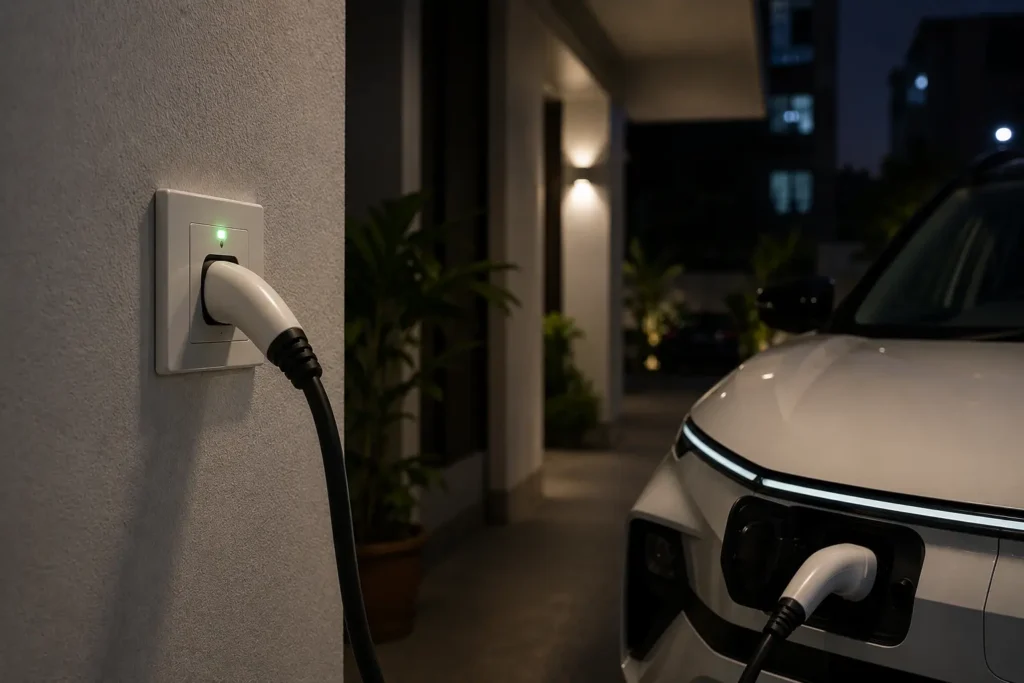
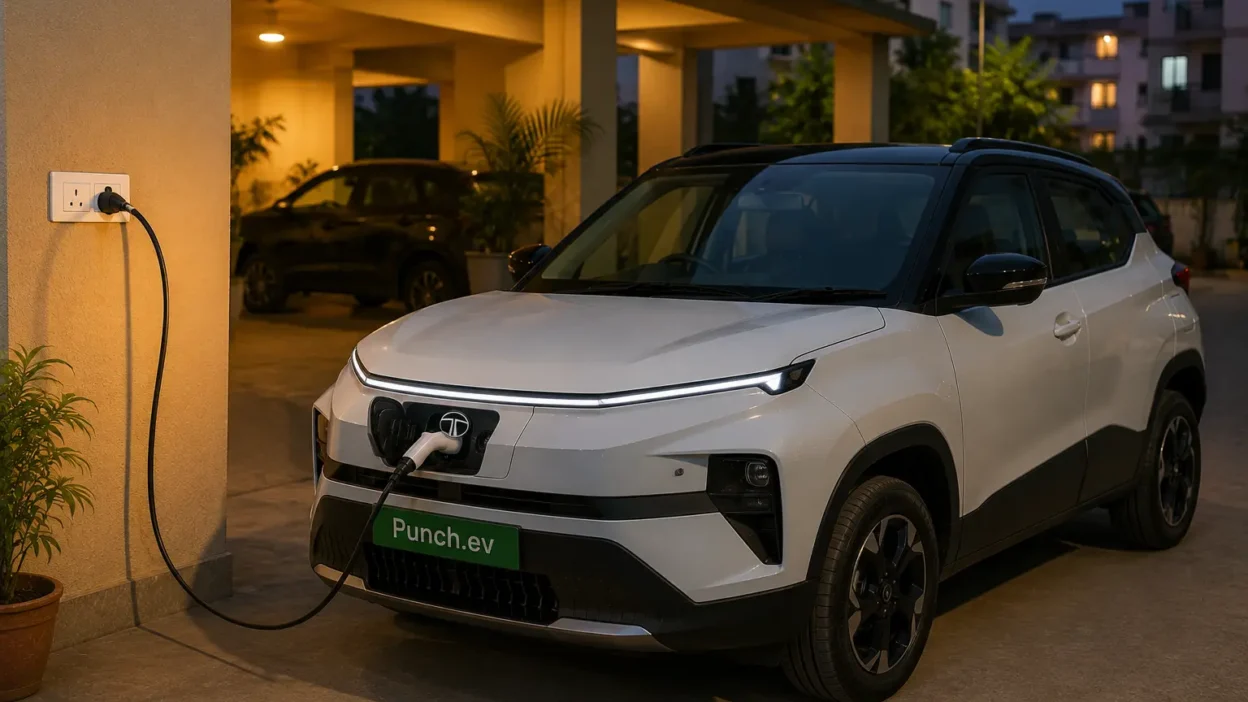
A standard 15A household socket is technically compatible with the Tata Punch EV. The car ships with a portable AC charging cable that can be plugged into this kind of socket, and Tata Motors positions this as a genuine home-charging option for buyers who haven’t yet installed a dedicated wall box.
That said, “compatible” doesn’t automatically mean “ideal.” A few things are worth understanding upfront:
- A 15A socket is rated for continuous domestic use, but EV charging draws power steadily for hours at a stretch, which is a very different load pattern from running a mixer or an iron.
- Manufacturers generally recommend using a properly earthed, dedicated 15A socket on its own circuit — not one shared with other heavy appliances like an air conditioner or geyser.
- It’s practical mainly for overnight or long-duration charging, since the power draw through a household socket is modest compared to a dedicated AC wall charger.
In short, a 15A socket works well as a backup or entry-level charging method, especially if your daily driving is moderate and you have 8–10 hours available for charging, such as overnight.
Understanding Tata Punch EV Battery Variants
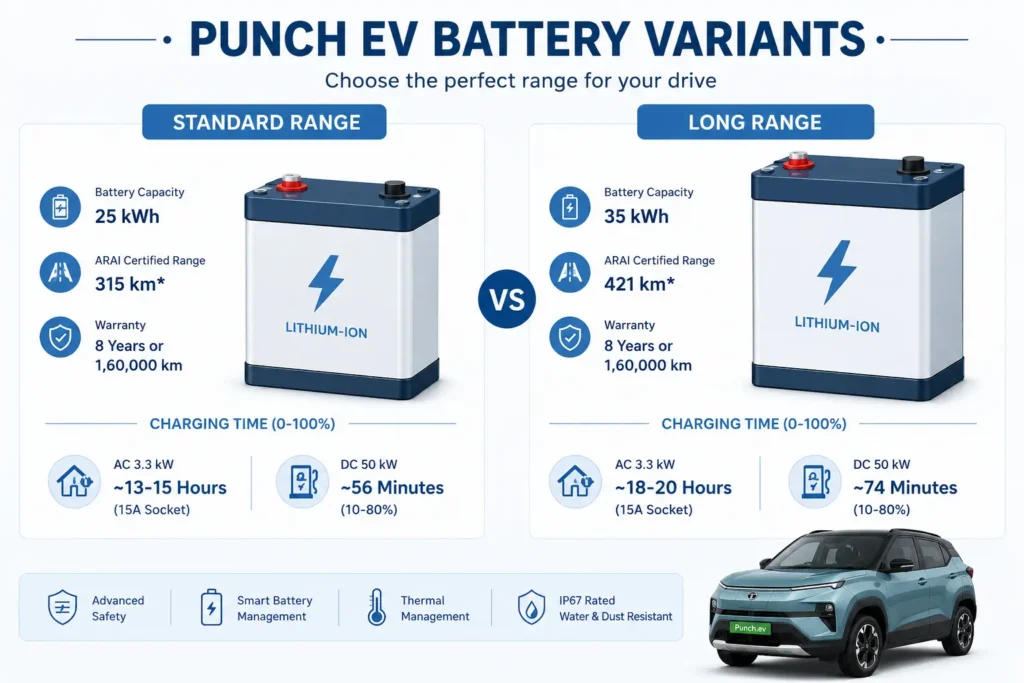
The current Tata Punch EV lineup is offered with two battery pack options, generally referred to as the Standard Range and Long Range variants.
Standard Range uses a smaller battery pack, aimed at buyers whose daily usage is largely limited to city commuting — office runs, school drops, and local errands. It offers a lower real-world range but is lighter on the pocket and charges a bit quicker on AC power simply because there’s less energy to fill.
Long Range uses a noticeably larger battery pack designed for buyers who want fewer charging stops, longer weekend trips, or simply more of a safety cushion in daily use. Naturally, filling a bigger battery from a modest power source like a 15A socket takes proportionally longer.
Neither variant is “better” in an absolute sense — it comes down to how many kilometres you actually drive in a typical week and how much charging flexibility you have at home or work.
How Fast Does a 15A Socket Charge the Tata Punch EV?
This is where most buyers want a straight answer, so here’s a realistic estimate based on typical household socket output and standard AC charging efficiency losses.
A 15A socket in India, when used safely and continuously, delivers roughly 2.5–3 kW of usable power to the vehicle — noticeably less than a dedicated 3.3 kW or 7.2 kW AC wall charger, both because of built-in safety derating and typical voltage fluctuations in home wiring.
| Battery Variant | Approximate Charging Time (0–100%) | Suitable For |
|---|---|---|
| Standard Range | Roughly 13–15 hours | Overnight charging, daily city commuting |
| Long Range | Roughly 18–20 hours | Overnight charging with limited daytime top-ups, occasional long trips |
These figures are estimates, not fixed numbers. Actual charging duration depends on:
- Battery temperature at the start of charging
- The condition and efficiency of the onboard charger
- Voltage fluctuations common in Indian household supply
- Charging losses that occur as electricity is converted from AC to the battery’s DC storage
If your daily driving is well within your battery’s range, you rarely need a full 0–100% charge anyway, which makes the practical experience faster and less demanding than these worst-case numbers suggest.
Real-World Charging Experience
On paper, charging times look intimidating. In daily use, they tend to matter far less than expected.
Overnight charging is where the 15A socket genuinely shines. Plug in after dinner, unplug before you leave for work — an 8 to 10-hour window comfortably tops up a battery that’s dropped to 20–40% from daily commuting.
Daily commuting in most Indian cities rarely exceeds 30–50 km a day. This means you’re usually topping up a partially depleted battery, not charging from empty, so real-world charging sessions are shorter than the full 0–100% figures above.
Charging habits matter more than raw speed. EV owners generally find it easier to plug in every night regardless of battery percentage, rather than waiting for the battery to run low and then needing a long uninterrupted session.
Charging interruptions — a power cut, a tripped MCB, or simply forgetting to plug in — are more disruptive with a 15A socket than with a faster charger, since there’s less buffer to recover lost charging time.
Summer vs winter also plays a role. Extreme heat or cold affects battery charging efficiency slightly, and charging times can stretch a little longer in peak summer afternoons or cold winter nights compared to mild weather.
Is Charging Through a 15A Socket Safe?
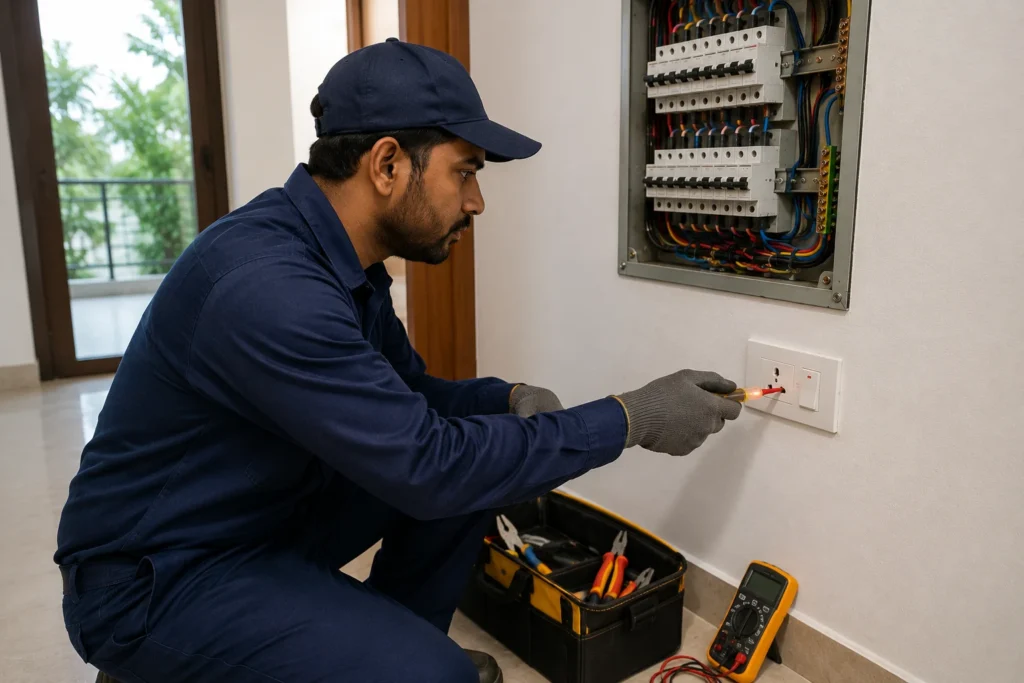
Safety is non-negotiable when you’re drawing sustained power for hours, and this is the part first-time EV owners tend to underestimate.
Before relying on a 15A socket for regular EV charging, check the following:
- Proper earthing: The socket must have a solid earth connection. Charging without proper earthing is a genuine safety hazard.
- Dedicated MCB: Ideally, the socket should be on its own miniature circuit breaker rated appropriately for the load, not shared with multiple other appliances.
- Quality of wiring: Older homes with aging or undersized wiring can heat up under sustained load. If your electrical setup is more than a decade old, it’s worth having it inspected.
- Heat generation: Some warmth in the plug or socket during charging is normal, but excessive heat, a burning smell, or a socket that feels hot to touch is a sign to stop charging immediately and get it checked.
- Avoid extension cords: Charging an EV through a long extension cord or a cheap multi-plug board is one of the most common causes of overheating and electrical faults.
- Professional inspection: A one-time visit from a qualified electrician to confirm your socket, wiring, and earthing can handle sustained EV charging load is a small cost for genuine peace of mind.
Used correctly, a 15A socket is a reasonably safe way to charge. Used carelessly — old wiring, shared circuits, cheap extension boards — it becomes a real risk.
Electricity Consumption and Charging Cost
A full charge on the Standard Range battery consumes roughly 25–30 units of electricity, while the Long Range battery consumes somewhat more, factoring in typical charging losses of around 10–15% during AC charging.
Actual charging cost depends heavily on your state’s residential electricity tariff, which varies significantly across India. As a broad approximation, most owners find that a full home charge costs meaningfully less than an equivalent tank of petrol for a comparable driving distance, though exact savings depend on your local tariff slab and whether you fall into a higher consumption bracket after adding EV charging to your monthly usage.
It’s worth checking your electricity board’s tariff structure before assuming savings, since some states charge progressively higher rates as total monthly consumption increases.
15A Socket vs Dedicated AC Wall Charger
| Factor | 15A Household Socket | Dedicated AC Wall Charger |
|---|---|---|
| Charging Speed | Slower (2.5–3 kW) | Faster (3.3–7.2 kW) |
| Convenience | Immediate, no installation needed | Requires installation and approval |
| Installation Cost | None | One-time setup cost |
| Daily Usage | Suitable for light to moderate commuting | Better for longer daily distances |
| Safety | Adequate if wiring is sound | Built with dedicated safety features |
| Best For | Backup charging, low-mileage users, renters | Long-term owners, higher daily mileage |
Many owners actually use both — a 15A socket for routine top-ups and a dedicated charger for faster, more frequent charging needs as their usage grows.
Tips to Improve Charging Efficiency
- Charge overnight when electricity demand (and sometimes tariff) is lower.
- Avoid charging immediately after a long, hot drive — let the battery cool slightly first.
- Keep the charging cable and socket clean and free of dust or moisture.
- Charge to 80–90% for daily use rather than always topping up to 100%, which is gentler on long-term battery health.
- Periodically check that the socket and plug aren’t warming up excessively during long sessions.
- Get your home wiring load-tested if you’re charging daily for months on end.
Common Mistakes to Avoid
- Using cheap extension boards: These are not built for sustained multi-hour loads and are a leading cause of overheating.
- Charging from a damaged or worn socket: Any sign of scorching, loose pins, or a wobbly socket should be replaced before use.
- Overloading the circuit: Running the AC or geyser on the same circuit while charging can trip the MCB or, worse, overheat the wiring.
- Poor ventilation: Charging in a cramped, poorly ventilated space isn’t ideal, especially in peak summer.
- Improper earthing: Skipping this step to save time is one of the most common and most dangerous shortcuts.
Frequently Asked Questions
Can I charge my Tata Punch EV daily using a 15A socket? Yes, as long as the socket, wiring, and earthing are in good condition. Many owners with moderate daily mileage rely on this as their primary charging method.
Does charging overnight damage the battery? Not inherently. Modern EV batteries, including the Punch EV’s pack, are designed to handle regular overnight charging. Charging to 100% every single night isn’t necessary, but occasional full charges aren’t harmful either.
How much electricity does one full charge consume? Roughly 25–30 units for the Standard Range variant and somewhat more for the Long Range variant, depending on charging losses.
Can I use an extension board to charge my EV? It’s best avoided. A direct, properly rated socket connection is safer than routing sustained load through an extension board.
Should I install a dedicated wall charger? If your daily driving distance is high, or if you find overnight charging on a 15A socket isn’t enough to cover your needs, a dedicated AC wall charger is a worthwhile upgrade.
Is a dedicated EV electricity meter required? It isn’t mandatory for basic 15A socket charging, though some states offer separate EV tariff categories that can work out cheaper for owners who charge frequently. It’s worth checking with your local electricity board.
Which battery variant charges faster on a 15A socket? The Standard Range battery, simply because it holds less energy and therefore takes proportionally less time to fill compared to the Long Range pack.
Does charging speed slow down above 80%? On AC charging through a socket, the drop-off isn’t as pronounced as it is with DC fast charging, but charging does typically taper somewhat as the battery approaches a full charge, which is normal behaviour for lithium-ion and LFP battery chemistries alike.
Is it normal for the charging cable to feel slightly warm? Mild warmth during extended charging is generally normal. Excessive heat or any burning smell is not, and charging should be stopped immediately if that happens.
Can weather affect charging time? Yes. Extreme summer heat or winter cold can slightly affect charging efficiency and duration compared to charging in moderate weather.
Conclusion
A 15A household socket is a genuinely usable way to charge the Tata Punch EV, particularly for owners with moderate daily driving needs and access to a safe, properly earthed socket overnight. It won’t match the speed of a dedicated AC wall charger, and the Long Range battery will naturally take longer to fill than the Standard Range pack, but for a large number of Indian EV buyers, especially those just starting their EV journey, it’s a practical starting point. If your daily distances grow or you find yourself needing faster turnarounds, upgrading to a dedicated wall charger later is always an option. Choose based on how you actually drive, not on charging specifications alone.