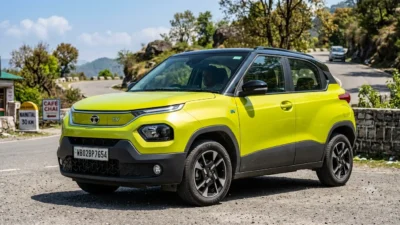

If you’ve been comparing the Tata Punch EV’s brochure range against what owners are actually posting in forums and long-term reviews, you’ve probably noticed the numbers don’t quite line up. A claimed range of 375 km or 468 km on paper often turns into something meaningfully lower once you factor in Indian city traffic, air conditioning, and summer heat. This isn’t unique to Tata, and it isn’t necessarily a defect — but understanding exactly where and why the gap shows up will help you set realistic expectations before you buy, or make sense of what you’re already experiencing if you own one.
Claimed vs Real-World Range: Why the Gap Exists
Every EV sold in India carries an ARAI-certified range figure, tested under the MIDC cycle in controlled laboratory conditions. These numbers are useful for comparing vehicles on a like-for-like basis, but they were never designed to predict what you’ll see on your daily commute.
Tata itself has acknowledged this gap directly. Alongside the ARAI-rated figures for the 2026 Punch EV facelift, the company also publishes what it calls a “C75” real-world range rating — essentially the range that roughly 75 percent of past Tata EV customers have actually achieved, based on analysis of real driving data. For the 30 kWh pack, that C75 figure sits at roughly 260–275 km against an ARAI claim of 375 km. For the 40 kWh Long Range pack, it’s roughly 335–355 km against a claimed 468 km. That’s a gap of well over 100 km on both variants, and it’s coming directly from the manufacturer, not a third-party critic.
The reasons behind that gap are consistent across nearly every EV sold in India:
- Air conditioning draws meaningful power, especially in a country where it’s running almost year-round
- Stop-start city traffic is less efficient than the steady-speed conditions used in lab testing
- Extreme ambient temperatures affect battery performance in both directions — very hot and very cold
- Driving style, tyre pressure, and cabin load all pull real-world numbers away from lab conditions
2026 Punch EV Facelift: 30 kWh and 40 kWh Packs Explained
The 2026 facelift brought a genuine upgrade over the outgoing model, which offered smaller 25 kWh and 35 kWh packs. The new Punch EV comes with two options:
- 30 kWh (Medium Range): ARAI-rated at 375 km, with Tata’s own C75 real-world estimate around 260–275 km
- 40 kWh (Long Range): ARAI-rated at 468 km, with a C75 real-world estimate around 335–355 km
Both packs use LFP (lithium iron phosphate) prismatic cells, a switch from the cylindrical cells used in the earlier generation. Prismatic cells pack more tightly, which is part of how Tata fit 5 kWh of extra capacity into each variant without dramatically increasing the car’s footprint. For context, independent road tests of the outgoing 35 kWh Long Range Punch EV recorded a combined real-world range closer to 229 km — noticeably below even the older ARAI claim of 421 km, which gives you a sense of how wide this gap can get once real conditions are involved.
If you’re deciding between the two battery sizes, it’s worth thinking in terms of the C75 figures rather than the ARAI numbers, since that’s the range you’re statistically more likely to experience on a typical day.
How Extreme Heat (40°C+) Cuts Into Range
Indian summers are genuinely tough on EV range, and the Punch EV is not immune to this.
In one independently conducted city efficiency test, testers recorded an average of just 5.43 km/kWh while driving the Long Range Punch EV in ambient temperatures around 40°C. At that efficiency figure, even the larger 40 kWh pack would translate to noticeably less real-world range than the C75 estimate suggests, purely because of how hard the climate control system has to work to keep the cabin comfortable in that kind of heat.
A few specific ways high heat affects range:
- Cabin cooling load increases dramatically above roughly 35–38°C, and the air conditioning compressor draws directly from the same battery that powers the motor
- Battery thermal management activates more aggressively in extreme heat, which itself consumes a small amount of energy to keep cell temperatures within a safe operating band
- Charging behaviour can also be affected, with some owners reporting that fast charging speeds taper slightly faster in very hot conditions as the battery management system prioritises cell safety over charging speed
This isn’t a fault specific to the Punch EV — it’s a characteristic of lithium-ion battery chemistry generally, and it’s part of why LFP chemistry (which Tata uses here) is considered relatively heat-tolerant compared to other lithium-ion formulations. Even so, “heat-tolerant” doesn’t mean “immune,” and range loss during peak summer months is something Indian Punch EV owners should plan around rather than be surprised by.
Level 3 Regenerative Braking: When “Maximum Regen” Backfires
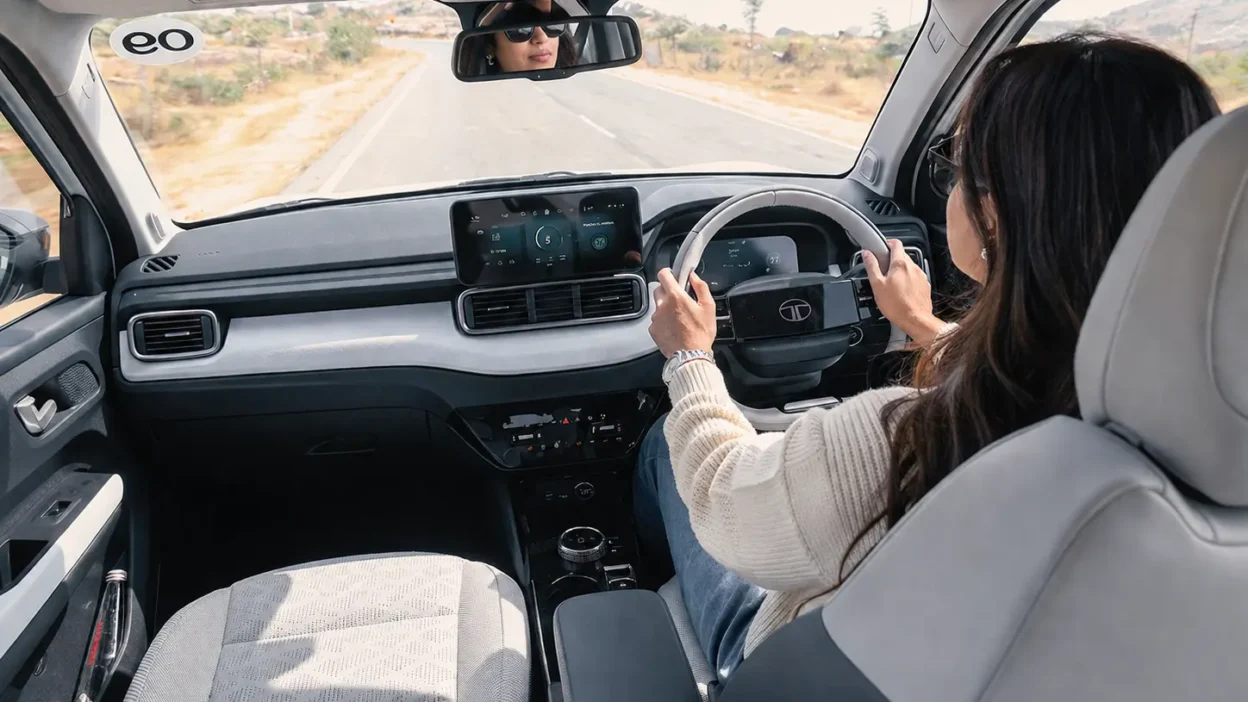
The Punch EV offers a four-level regenerative braking system, adjustable through paddle shifters, ranging from Level 0 (no regen) to Level 3 (maximum regen). On paper, higher regen levels should mean better efficiency, since more of the car’s kinetic energy is recovered back into the battery when you lift off the accelerator.
In practice, city testing has shown this doesn’t always hold true. In the same real-world efficiency test mentioned above, the aggressive deceleration caused by Level 3 regen actually worked against efficiency in dense city traffic. The strong regen slowed the car down earlier and more forcefully than drivers expected, which meant more throttle input was needed afterward to maintain speed — effectively cancelling out some of the energy that regen had just recovered. When the same test was repeated with regen dialled back to Level 2, the driving experience felt more natural and the car required less compensating throttle input.
The takeaway for Punch EV owners is fairly practical: Level 3 regen is genuinely useful on downhill stretches, highway driving with long, predictable braking zones, or one-pedal-style driving where you’re deliberately managing speed with the accelerator alone. In stop-start city traffic, though, a more moderate Level 1 or Level 2 setting can sometimes deliver better real-world efficiency than the “maximum regen” setting might suggest.
City Driving vs Highway Driving: Different Range Realities
Range behaves differently depending on where you’re driving, and it’s worth separating the two scenarios.
City driving tends to be less efficient overall in most EVs, thanks to constant acceleration and deceleration, but the Punch EV’s regen system is specifically tuned to recover some of that lost energy — provided the regen level is matched sensibly to traffic conditions, as covered above.
Highway driving at sustained higher speeds draws more continuous power to overcome aerodynamic drag, which is the dominant factor at speed for any vehicle, electric or otherwise. This means that even though highway driving avoids the stop-start inefficiency of city traffic, it introduces its own kind of range penalty at higher, sustained speeds.
Most Punch EV owners report their best real-world efficiency in mixed conditions — moderate city traffic combined with occasional highway stretches — rather than either extreme on its own.
Common Owner-Reported Range Complaints
Long-term owner reviews and forum discussions surface a fairly consistent set of concerns beyond the general claimed-vs-real gap:
- Practical daily range well under 250 km reported by some owners of earlier, smaller-battery variants, which can create genuine range anxiety for anyone expecting brochure numbers
- Battery cooling system warnings, with at least one documented case of an amber warning light appearing on the instrument cluster within the first 1,000 km, traced to the coolant pump responsible for circulating coolant through the battery pack
- Inconsistent range estimation on the dashboard, a common complaint across many EVs where the displayed remaining range doesn’t track smoothly with actual driving conditions
- Range dropping further than expected during heavy AC use, particularly during peak summer months, which several sources note is a normal and usually temporary effect rather than a sign of permanent battery degradation
It’s worth being clear about the distinction here: a seasonal, weather-driven dip in range is expected behaviour, not a fault. Persistent range loss that doesn’t recover once temperatures moderate is the kind of pattern that’s worth having formally checked at a service centre.
Battery Health, Cooling System Issues, and Range Perception
Some of what gets reported as a “range problem” is actually a battery health or cooling system issue rather than a fundamental limitation of the vehicle itself. It’s useful to separate the two:
- Genuine capacity loss shows up as a persistent, non-seasonal drop in maximum range that doesn’t recover regardless of weather or driving style
- Temporary, weather-driven range dips — the kind caused by heavy AC use in extreme heat — are normal and typically resolve once temperatures moderate
- Cooling system or sensor faults, like the coolant pump issue some owners have reported, can trigger warning messages or perceived performance changes that aren’t strictly about the battery’s actual charge capacity
If you’re experiencing what feels like a range problem, it’s worth asking your service centre for a proper battery health check rather than assuming the worst. Not every range complaint traces back to the battery pack itself.
How to Get Closer to Claimed Range: Practical Tips
- Match your regen level to the driving environment — Level 2 for typical city traffic, Level 3 for highway or downhill stretches
- Precondition the cabin while still plugged in, where the car supports it, so you’re not drawing extra battery power to cool the cabin from a hot start
- Keep tyres inflated to the recommended pressure, since underinflated tyres increase rolling resistance and reduce efficiency
- Avoid unnecessary short bursts of hard acceleration, which draw disproportionately more energy than smooth, gradual acceleration
- Plan around C75 figures rather than ARAI figures when estimating your realistic range for trip planning, especially during summer months
- Keep an eye on charging habits at home, since consistent, moderate charging is generally better for long-term battery health than frequent full 100% charges. If you’re relying on a standard household socket for overnight charging, it helps to understand realistic charging times in advance — this guide on Tata Punch EV charging speed on a 15A socket breaks down what to expect.
Claimed vs Real-World Range: Quick Comparison
| Variant | ARAI-Claimed Range (MIDC) | Tata’s C75 Real-World Estimate | Recorded Efficiency in Hot-Weather City Testing |
|---|---|---|---|
| 30 kWh (Medium Range) | 375 km | Approximately 260–275 km | Not independently tested at time of writing |
| 40 kWh (Long Range) | 468 km | Approximately 335–355 km | 5.43 km/kWh recorded in one 40°C city test |
These figures should be read as reference points rather than guarantees — your own range will vary depending on driving style, traffic, weather, and regen settings.
Is This a Punch EV Problem, or an India-Wide EV Problem?
It’s worth putting the Punch EV’s range gap in context. India’s climate — extended periods of extreme heat, dense urban traffic, and inconsistent charging infrastructure outside major cities — is genuinely tougher on EV range than the conditions most global range-testing standards were designed around. Other budget EVs sold in India have faced similar scrutiny over the gap between claimed and real-world range, and in at least one notable case, a state transport department temporarily suspended EV subsidy eligibility for a model pending an investigation into range complaints.
None of this excuses inflated marketing numbers, but it does mean the Punch EV’s real-world range gap isn’t happening in isolation — it reflects a broader challenge with how EV range is certified and communicated to Indian buyers generally. If you’re also factoring state-level EV incentives into your buying decision, it’s worth checking what’s currently available where you live — for readers in the capital, this breakdown of the Delhi EV policy 2026 registration and road tax waiver covers what buyers there can currently expect.
Frequently Asked Questions
Why is my Tata Punch EV’s real-world range lower than the claimed range? Claimed ARAI figures are measured under controlled lab conditions using the MIDC cycle, while real-world driving involves traffic, air conditioning, temperature extremes, and driving style — all of which reduce actual range. Tata’s own C75 estimate reflects this gap directly.
What is the C75 range rating Tata mentions for the Punch EV? It’s Tata’s own real-world range estimate, based on analysis of actual driving data from past EV customers, representing the range roughly 75 percent of owners can expect to achieve.
Does hot weather really affect EV range that much? Yes. Air conditioning load and battery thermal management both draw power, and independent testing has recorded efficiency drops during extreme heat conditions around 40°C.
Should I use Level 3 regen all the time for better range? Not necessarily. While Level 3 regen can help on highways or downhill stretches, testing has shown that in dense city traffic, a more moderate Level 2 setting can sometimes produce smoother, more efficient driving.
Is the 30 kWh or 40 kWh pack better for range anxiety? The 40 kWh Long Range pack offers a meaningfully higher real-world range estimate and is the safer choice if you regularly drive longer distances or want a larger safety margin.
Does a range drop always mean my battery is degrading? No. Seasonal, weather-driven range dips are normal and typically temporary. Persistent range loss that doesn’t recover with milder weather is worth having checked by a service centre.
Can I improve my Punch EV’s real-world range? Yes — matching regen levels to driving conditions, maintaining correct tyre pressure, preconditioning the cabin while plugged in, and avoiding unnecessary hard acceleration can all help close the gap between claimed and actual range.
How does the Punch EV’s range compare to its previous generation? The 2026 facelift’s 30 kWh and 40 kWh packs are 5 kWh larger than the outgoing 25 kWh and 35 kWh options, with correspondingly higher claimed and real-world range figures.
Is the Punch EV’s range gap unusual compared to other EVs in India? Not particularly. Most EVs sold in India show some gap between lab-certified and real-world range, and Indian climate and traffic conditions are a significant contributing factor across the segment.
Where can I check realistic home charging times for the Punch EV? Charging time depends on your power source and battery variant — a detailed breakdown for standard household socket charging is available in this guide on Tata Punch EV 15A socket charging speed.
Conclusion
The gap between the Tata Punch EV’s claimed and real-world range is real, well-documented, and — to Tata’s credit — acknowledged directly through its own C75 rating rather than hidden behind brochure numbers alone. Extreme heat, regen settings, and city traffic patterns all play a measurable role, and understanding how each one affects your specific driving conditions is far more useful than fixating on the ARAI figure alone. If you’re buying a Punch EV, plan your expectations around the C75 range rather than the headline number, and if you already own one and range feels inconsistent, separate what’s likely seasonal from what might genuinely need a service centre check.